UM + UIM required
New Hampshire coverage menu: insurance optional, but every policy comes fully loaded
New Hampshire is the state where most drivers are not required to buy car insurance. If you do buy a policy, the law decides several lines of it for you. Here is what those lines are and what they pay.
By CoverOath Editorial Team Updated 6 min read
The promise, in short
New Hampshire law does not require most drivers to carry auto insurance. You must instead be able to meet the state's financial responsibility rules after an at-fault crash. Once you buy a policy, it must include 25/50/25 liability, medical payments coverage of at least $1,000 and uninsured/underinsured motorist coverage equal to your liability limits. The New Hampshire Insurance Department regulates insurers and takes consumer calls at 800-852-3416 (in state) or 603-271-2261.
- Minimum liability
- 25/50/25
- MedPay
- $1,000 in every policy
- UM/UIM
- Equal to liability limits
New Hampshire coverage menu
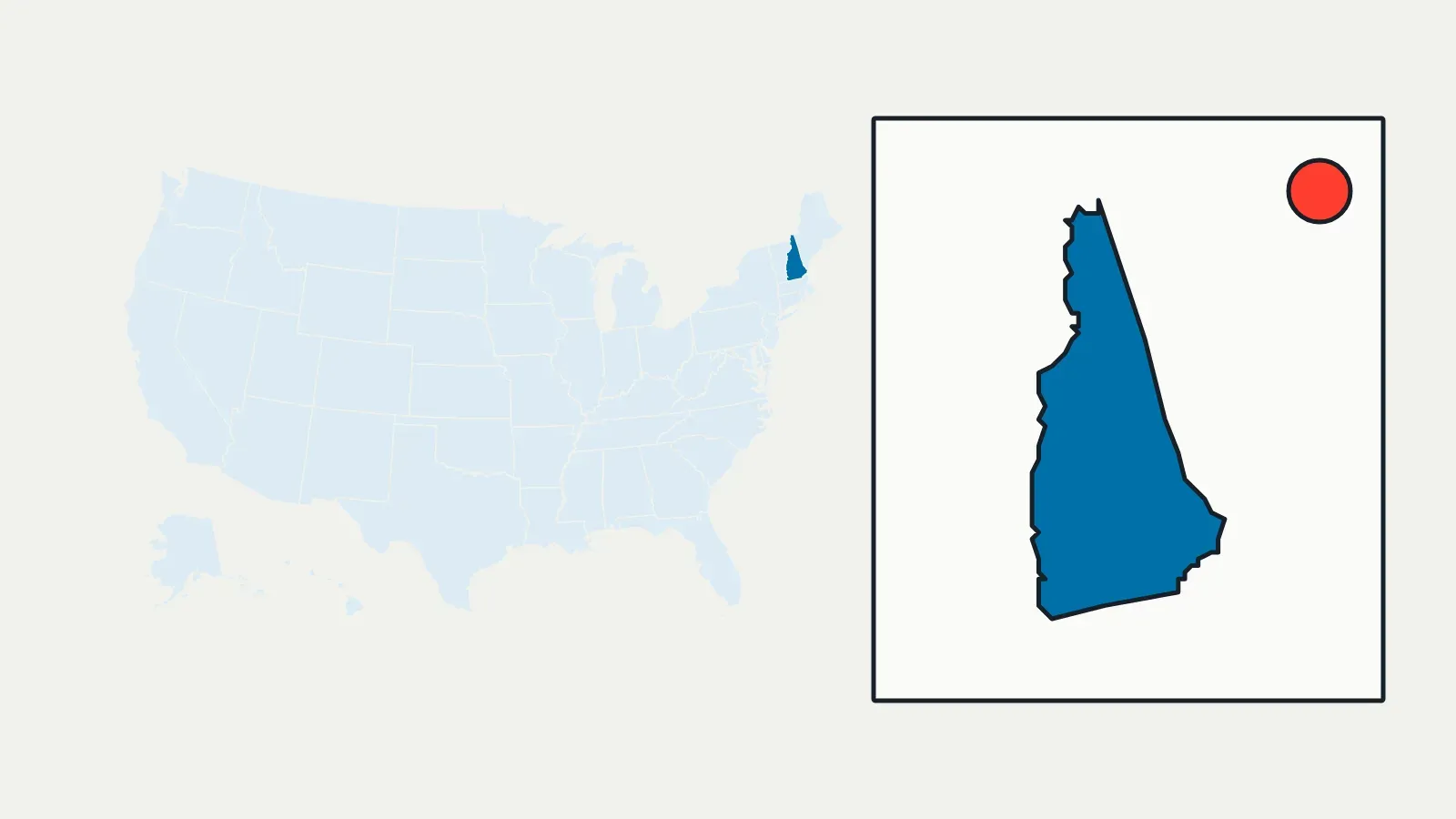
What a New Hampshire policy must carry
The New Hampshire Insurance Department says it plainly: state motor vehicle law does not require you to carry auto insurance. What it does require is that you can show you meet the financial responsibility rules after an accident you cause. If you cannot, your driving privileges may be suspended. Most drivers meet that rule with a policy, and a policy written under New Hampshire law has a fixed floor.
| Coverage | Minimum | What it pays |
|---|---|---|
| Bodily injury, per person | $25,000 | One injured person's claim |
| Bodily injury, per accident | $50,000 | Everyone injured in one crash |
| Property damage | $25,000 | Other people's cars and property |
Bodily injury liability pays the people you injure, and property damage liability pays for what you hit. Neither pays for your own injuries or your own car. Anything above the limits is yours to pay, so the liability limits page is worth a look before you settle on 25/50/25.
Two coverages that come with every policy
Medical payments, at least $1,000
Every personal auto policy on a car registered or garaged in New Hampshire must include MedPay of at least $1,000 a person. It pays reasonable medical costs for the driver and passengers of the insured car, whoever caused the crash.
Uninsured/underinsured motorist
Every policy must include uninsured motorist coverage, and its limits must equal your liability limits. It also pays when the at-fault driver is insured for less than you are.
MedPay in New Hampshire has its own rules. It covers medical costs incurred within three years of the injury. You choose whether to claim it, your health insurance or both, but you cannot be paid twice for the same bill. A health insurer cannot reduce its benefits because MedPay exists, and the coverage cannot be assigned to a doctor or hospital. Commercial policies insuring more than four cars, and garage and trucking policies, fall outside this rule.
How UM/UIM works in New Hampshire
- Limits follow liability. If you buy liability above 25/50/25, your uninsured motorist limits rise to match it.
- Underinsured drivers are included. The Insurance Department's guide says the coverage pays when the at-fault driver carries less coverage than you do, so New Hampshire treats underinsured motorist coverage as part of the same line.
- Hit-and-run drivers count as uninsured for bodily injury.
- Bodily injury only, with one exception. UM does not pay to fix your car. If the at-fault driver's insurer is insolvent and no other insurance applies, UM must pay at least $25,000 for property damage.
- Watch what you sign. A release that settles a bodily injury claim must carry a warning that signing it may cost you your UM benefits.
The statute gives a written rejection right only to umbrella and excess policies: they must include UM at their own limits unless a named insured rejects it in writing. If you add an umbrella policy, check whether that form was signed.
RSA 264:15 does not address stacking UM limits across several cars, so the limit of liability section of your policy decides. How stacking works explains the two kinds.
Rideshare and optional coverages
The Insurance Department notes that personal policies have traditionally covered ridesharing while trying to exclude food delivery, and that an insurer cannot exclude liability coverage below the state minimums. It urges drivers to call their insurer before driving for an app. A rideshare endorsement is the usual way to close the gap.
Collision and comprehensive stay optional, though a lender or lease company will require both. UM does not repair your car, so those two coverages are the only way your policy pays for your own vehicle.
Where to check and complain
- Read your declarations page to confirm your liability, MedPay and UM limits match.
- Ask your insurer about any exclusion that applies to app-based driving or delivery.
- Contact the New Hampshire Insurance Department at 800-852-3416 (toll-free in state) or 603-271-2261 if an insurer will not explain a coverage or a claim decision.
Questions drivers ask
Do I have to buy car insurance in New Hampshire?
Most drivers do not. You must be able to meet the state's financial responsibility requirements after an at-fault accident, and the state can suspend your driving privileges if you cannot.
Can I take uninsured motorist coverage off a New Hampshire policy?
Not on a standard auto policy. The law requires it, at limits equal to your liability limits. Only umbrella and excess policies allow a written rejection.
Does New Hampshire require PIP?
No. Policies must include at least $1,000 of medical payments coverage instead.
Is 25/50/25 enough in New Hampshire?
It meets the law. A crash with serious injuries can exceed it; the liability limits calculator shows how much a larger claim would leave uncovered.
Drawn from
- New Hampshire Insurance Department — Automobile Insurance Consumer FAQ (2022)
- New Hampshire RSA 264:15 (uninsured motorist coverage)
- New Hampshire RSA 264:16 (medical payments coverage)
- New Hampshire RSA 259:61 (motor vehicle liability policy limits)
Facts on this page were checked against these sources on November 15, 2026. RSA 259:61 was last amended in 2016, and the 25/50/25 limits it sets were unchanged on that date.
Have this coverage priced
CoverOath doesn't sell insurance. Answer five questions and CoverOath passes your request to licensed insurance agents and insurers, who can quote the coverage; you decide whether to buy anything.
- 1 The coverage you want priced.
- 2 Where an agent can reach you, and your consent.
- 3 A licensed insurance agent or insurer contacts you with a quote. Nothing is bought until you agree.
CoverOath is not paid by you. The licensed insurance agents and insurers who contact you set their own prices and terms. How we make money.
Adjacent layers
-
Core coverage
Uninsured motorist coverage (UM)
Pays your injuries when an uninsured or hit-and-run driver is at fault. Required in about 20 jurisdictions.
-
Core coverage
Medical payments coverage (MedPay)
Pays crash medical and funeral costs for you and passengers, whoever was at fault. Required in Maine and New Hampshire.
-
Companion policy
Umbrella insurance
Pays liability claims above your auto limit. Most insurers want about $250,000 of auto liability underneath.