Ride-app add-on
Rideshare endorsement: the plate for the hours the app is on
Driving for a ride app splits your day into periods, and each period has a different insurer behind it. Here is who covers what, where nobody does, and how the endorsement fills that space.
By CoverOath Editorial Team Updated 7 min read
The promise, in short
Ride-app driving runs in periods: app off, logged on and waiting (period 1), driving to a pickup (period 2) and carrying a rider (period 3). Many personal policies exclude all three. State laws make the app company or the driver carry liability in each period, often $50,000/$100,000/$25,000 while waiting and $1 million once a ride is accepted. The weak spot is period 1: lower limits, and usually nothing for damage to your own car. A rideshare endorsement extends your personal coverages into that time. Products differ by insurer and state, so read the endorsement and your state's rules.
- Gap period
- App on, no ride accepted
- Period 1 minimum, often
- 50/100/25 liability
- Ride minimum, often
- $1 million liability
- Sold by
- Some insurers, by state
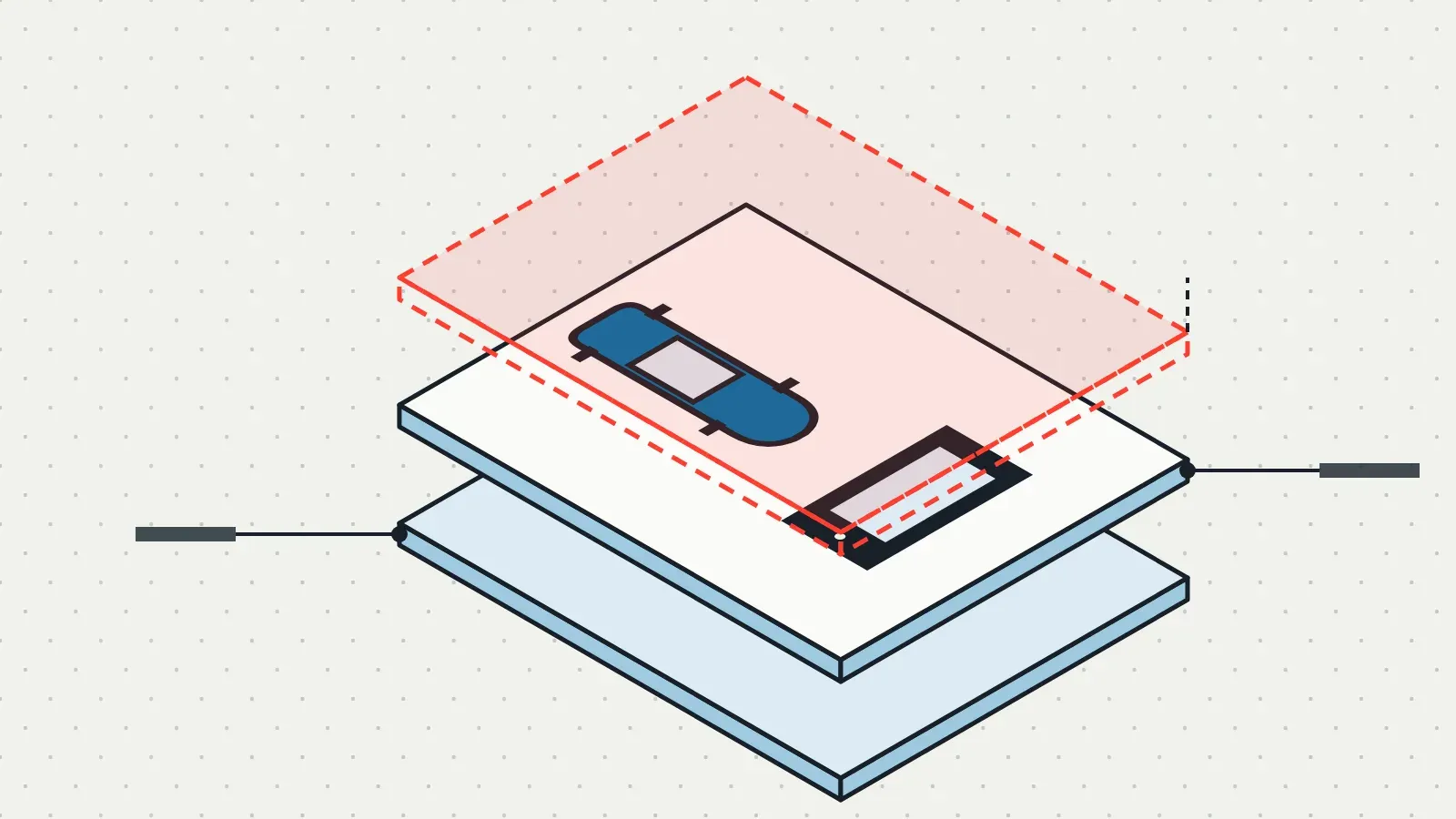
Why a personal policy stops at the app
A personal auto policy is priced for commuting, errands and trips. Carrying people for a fee is a different risk, and most personal policies carve it out. The NAIC notes that personal policies typically exclude business use and the time a driver is available for hire, whether or not a ride is in progress. The exclusions section of your policy is where that wording lives.
State law backs the carve-out. Minnesota's statute, for example, says a personal insurer may exclude any and all coverage while the driver is logged on or giving a ride, and that nothing in the law requires a personal policy to cover that time. It also makes the app company tell drivers in writing, before they accept requests, that their own policy might not cover them.
The three periods of a ride-app shift
Insurers and lawmakers split app time into periods. Minnesota's 2024 law spells them out: period 1 is when a driver is logged in but has not accepted a ride; period 2 runs from accepting a ride to the pickup; period 3 is the trip itself, from pickup to drop-off. Most state laws use the same idea and call periods 2 and 3 together a prearranged ride.
| Period | What is happening | Liability minimum | Your personal policy |
|---|---|---|---|
| App off | Personal driving | Your state's usual minimum | Applies as written |
| Period 1 | Logged on, waiting for a request | 50/100/25 in Florida, Idaho, Iowa, Tennessee and Texas; 50/100/30 in Minnesota | Often excluded |
| Periods 2 and 3 | Ride accepted, through drop-off | $1 million in those five states; $1.5 million in Minnesota | Often excluded |
Some states add more than liability in period 1. Texas requires uninsured/underinsured motorist coverage and personal injury protection unless rejected in writing; Florida adds PIP and UM; Minnesota adds no-fault benefits and UM/UIM. Your state menu page shows whether your state has its own rideshare rule.
Where the gap sits
In periods 2 and 3 the app company's policy carries high liability limits, and the NAIC notes that Uber and Lyft offer contingent collision and comprehensive coverage while a ride is under way, but only if you bought those coverages on your personal policy. Ask the company what deductible applies to that coverage before you need it.
Period 1 is thinner. The law asks for liability far below the $1 million that applies once a ride is accepted, and the company's coverage may be contingent: it may respond only after your own insurer says no. The statutes in Iowa and Minnesota list no collision or comprehensive requirement at all, so damage to your own car while you wait for a request may have no insurer behind it.
What the app's policy usually handles
Injuries and property damage to others, within the state minimums for the period; in a ride, high liability limits and contingent car damage.
What it often leaves to you
Damage to your own car in period 1, deductibles, and anything above the period 1 liability limits.
What a rideshare endorsement changes
A rideshare endorsement amends your personal policy so that some or all of its coverages keep working while the app is on. The aim is period 1: your liability, collision, comprehensive and other lines continue as if you were driving for yourself until a ride is accepted and the company's coverage takes over. Whether a product reaches into periods 2 and 3, and how, is up to the insurer; the NAIC says products, limits and availability vary by insurer and state.
- Ask which periods it covers. Some products stop when a ride is accepted.
- Ask which coverages follow you. Liability alone does not repair your car.
- Ask about delivery apps. Carrying food or packages may be treated differently from carrying people.
- Ask about a commercial policy if you drive full time or for several platforms; see commercial auto insurance.
California's Department of Insurance keeps a page on ride-hailing coverage that lists products it approved for app drivers from 2015 on, including options from USAA and Allstate in 2016. The endorsement is bought from an insurer as part of your own policy; the app does not sell it.
Who it fits, and who already has enough
The endorsement fits a driver who uses a personal car for an app part time and carries collision and comprehensive. If your car is financed or leased, the lender requires those coverages, and the NAIC notes that some states require drivers to tell their lender about ride-app use. A driver with liability only has less to protect in period 1, but still faces the low liability limits.
A passenger needs none of this. The NAIC says your own policy may cover you as a passenger, and a non-owner policy is the option if you have no car.
How to check your policy
- Read the exclusions. Look for wording about vehicles used to carry people or property for a fee, or while available for hire.
- Find the endorsement on the declarations page. A rideshare endorsement is listed by name or form number, with its own premium.
- Tell your insurer you drive for an app. The NAIC notes some states require you to disclose it, and to keep proof of the app's coverage in the car.
- Read the app's insurance summary. Note its limits by period, its deductibles, and whether it is primary or contingent.
- Compare the limits. If you carry more than the period 1 minimum, the liability limits calculator shows what a large claim would leave uncovered.
Questions drivers ask
If the app company has insurance, why do I need an endorsement?
Because its coverage is thinnest in period 1, while you wait for a request. State laws set liability at levels such as 50/100/25 then, and they usually don't require anything for damage to your own car. Many personal policies exclude that time, so the endorsement is what keeps your own coverages on.
Does a rideshare endorsement cover me while a passenger is in the car?
Once a ride is accepted, state laws put the high limits on the app company's policy or yours. Whether your endorsement adds anything during a ride depends on the product; some stop at acceptance. The endorsement wording says which.
Do I have to tell my insurer that I drive for an app?
The NAIC notes that some states require it. Even where they don't, a policy that excludes ride-app use may not pay for a crash during app time, so the question is whether you want your coverage to reach those hours.
Is a rideshare endorsement the same as commercial auto insurance?
No. The endorsement extends a personal policy for part-time app driving. A commercial auto policy is a separate policy for vehicles used mainly for business.
Drawn from
- NAIC — Uber or Lyft? Protect yourself when ridesharing (Consumer Insight, March 5, 2020)
- Minnesota Statutes §65B.472 (transportation network company drivers)
- Minnesota Statutes §181C.01 (definitions of periods 1, 2 and 3)
- Iowa Code §321N.4 (transportation network company insurance)
- Texas Insurance Code, Chapter 1954 (transportation network company drivers)
- Florida Statutes §627.748 (transportation network companies)
- Idaho Code §41-2519 (transportation network company coverage)
- Tennessee Department of Commerce and Insurance — New ridesharing laws (2016)
- California Department of Insurance — TNC / ridesharing insurance
Facts on this page were checked against these sources on November 15, 2026. The period limits in the table come from the statutes of six states and are examples, not a national rule; other states set their own amounts, and rideshare endorsements differ by insurer.
Have this coverage priced
CoverOath doesn't sell insurance. Answer five questions and CoverOath passes your request to licensed insurance agents and insurers, who can quote the coverage; you decide whether to buy anything.
- 1 The coverage you want priced.
- 2 Where an agent can reach you, and your consent.
- 3 A licensed insurance agent or insurer contacts you with a quote. Nothing is bought until you agree.
CoverOath is not paid by you. The licensed insurance agents and insurers who contact you set their own prices and terms. How we make money.
Adjacent layers
-
Companion policy
Commercial auto insurance
A vehicle used mainly in business likely has no personal-policy coverage. Many insurers advise a $1M business limit.
-
Fine print
Car insurance exclusions
Intentional damage, paid rides and deliveries, wear and breakdowns: what personal auto policies commonly leave out.
-
Core coverage
Collision coverage
Pays to fix or replace your car after a crash, at fault or not, minus your deductible and up to its value.