Policy exclusions
Car insurance exclusions: the lines drawn through each promise
Every coverage in your policy comes with a list of situations it will not pay for. Here are the common ones, why they exist, and where the missing coverage is sold.
By CoverOath Editorial Team Updated 7 min read
The promise, in short
An exclusion is a sentence in the policy that takes a situation out of a coverage that would otherwise pay. The NAIC describes exclusions as the specific events and circumstances a policy will not cover. Common ones include damage you cause on purpose, using a personal car for business such as carrying paying passengers or deliveries, and wear and tear and mechanical failure. Exclusions differ by insurer and by coverage part, and an endorsement can add or remove one. Many gaps they leave can be closed with an endorsement or a separate policy.
- Where they sit
- After each coverage part
- Common on liability
- Intentional harm, business
- Common on your car
- Wear, breakdowns
- Can be changed by
- An endorsement
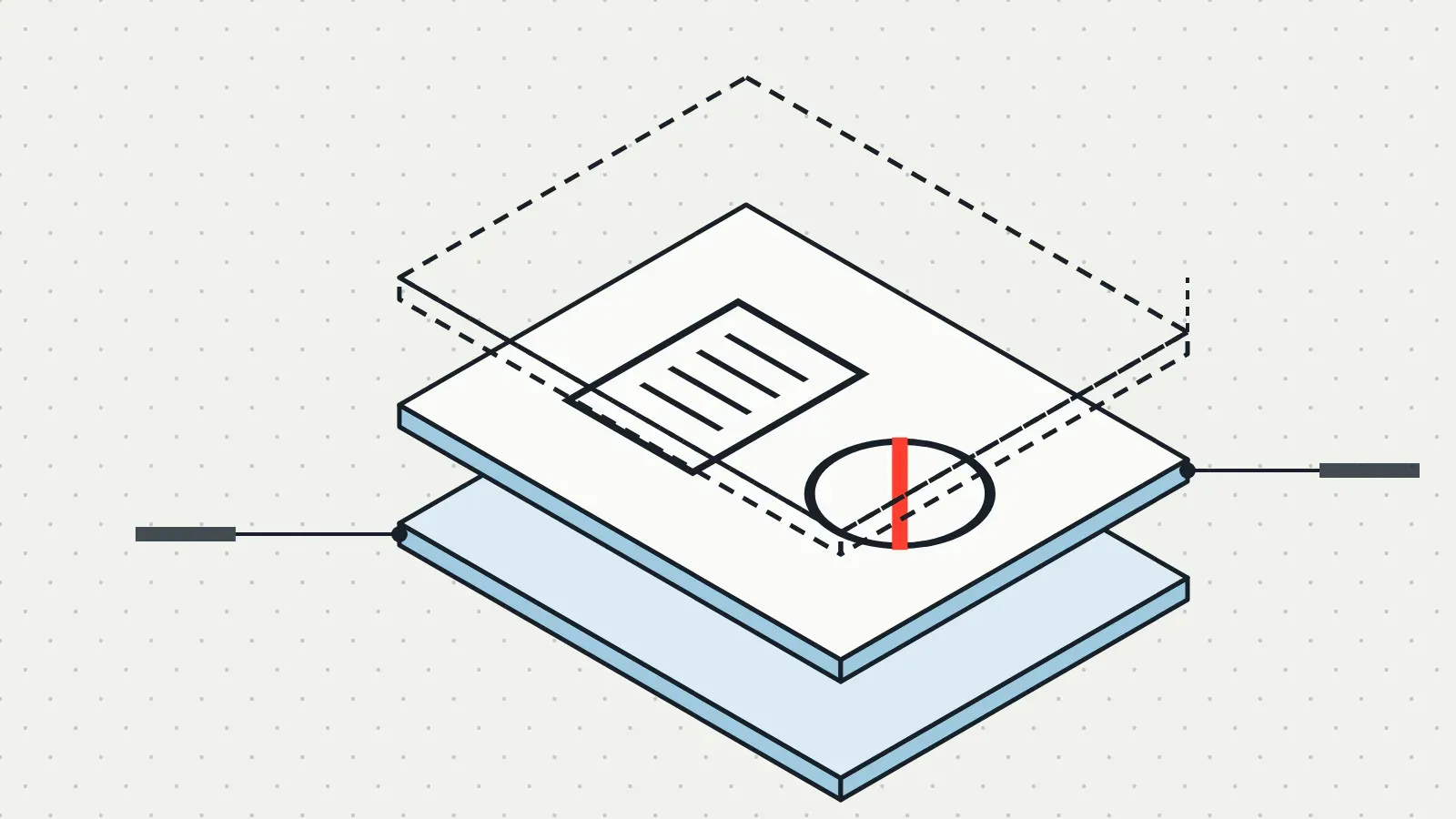
What an exclusion does
A coverage part starts broad. Its insuring agreement promises to pay, say, for direct and accidental loss to your car. The exclusions then remove specific cases from that promise. The NAIC's auto guide puts it plainly: the insuring agreement also identifies exclusions, the events and circumstances the policy will not cover.
Three other parts of the contract also narrow what is paid, and they are easy to confuse with exclusions.
Exclusion
The situation is not covered at all, even within your limit.
Limit
The situation is covered, but only up to a dollar amount.
Condition
The situation is covered if you meet a duty, such as prompt notice of the loss.
Definition
The situation falls outside a defined word, such as your covered auto or family member.
Exclusions are written per coverage part. Something excluded from the damage-to-your-car part may still be covered by liability, and the reverse. Read the list that follows the part you are claiming under. The parts of an auto policy page shows where each list sits.
Common exclusions, part by part
| Exclusion | Usually affects | Why it is there |
|---|---|---|
| Damage or injury caused on purpose | Liability and damage to your car | Insurance pays for accidents, not planned acts |
| Carrying people or goods for a fee | Liability and damage to your car | A different risk, priced in commercial and rideshare coverage |
| Car in the care of a garage, parking lot or dealer | Damage to your car | The business's own insurance is meant to respond |
| Wear and tear, mechanical or electrical breakdown | Damage to your car | Upkeep, not a sudden accident |
| Racing or speed contests | Liability and damage to your car, in the ISO form | The ISO form excludes prearranged or organized racing at a racing facility; check your wording |
| A car you regularly use but did not list | Liability and damage to your car | The ISO form excludes cars furnished or available for your regular use |
| Damage to your own car or property under liability | Liability | Liability pays others; your car is a physical damage claim |
The Missouri Department of Commerce and Insurance gives three typical exclusions in its guide to reading a policy: intentional damage to your own car, damage while the car is used as a public or delivery vehicle unless the policy says otherwise, and damage while the car is driven by employees of a garage, parking lot or auto sales agency. The Insurance Information Institute adds that collision will not pay for mechanical failure or normal wear and tear, and that liability does not cover damage to your own car.
Intentional acts
Policies pay for accidents. Damage or injury you intend is commonly excluded from both liability and physical damage coverage. The NAIC notes that an insurer may refuse to defend you if you are accused of intentionally injuring someone. The Missouri department lists intentional damage to your own car among the typical exclusions, so a car you damage on purpose is not a collision claim.
How a state treats an injured victim of a deliberate act can differ from the policy wording. If you are the victim, the other driver's exclusion is a question for a lawyer or your state insurance department, and your own uninsured motorist coverage may be worth checking.
Business use, deliveries and rideshare
This is the exclusion most likely to surprise a careful driver. Washington's insurance commissioner says most personal auto policies don't provide coverage if a loss occurs while performing job duties, and that people who drive for a rideshare or food delivery app may need commercial coverage. The same guide says a personal policy will generally cover you during unpaid volunteer work. The Louisiana Department of Insurance warns that most personal policies exclude carrying paying passengers.
Many states have written app-based driving into law. Iowa Code §321N.4, for example, sets coverage for transportation network company drivers of at least $50,000 per person, $100,000 per accident and $25,000 for property damage while the app is on and no ride is accepted, rising to $1 million during a ride. Florida Statutes §627.748 uses the same amounts. Those laws set what must be in place; they do not change the exclusion in your own policy. A rideshare endorsement or a commercial auto policy fills the gap.
What the damage-to-your-car part leaves out
Collision and comprehensive pay for sudden, accidental loss. Rust, worn brakes, a failed transmission or a tire that wears out are maintenance. Damage caused by a road hazard, such as a pothole, is a different matter: the III lists potholes and rollovers among losses collision covers.
- Breakdowns. A manufacturer's warranty, a service contract or mechanical breakdown insurance is where that coverage is sold.
- Equipment beyond the factory build. Some policies limit pay for parts that did not come with the car unless you add custom equipment coverage.
- Personal belongings in the car. Usually a homeowners or renters claim. See personal items stolen from a car.
How to find your own exclusions
- Get the full policy. The declarations page lists the forms and endorsements; ask for every one of them.
- Open the part you care about. Read its insuring agreement, then its exclusions list.
- Check the definitions. A word such as your covered auto can work like an exclusion.
- Read the endorsements last. They can add exclusions, remove them, or rewrite them for your state.
- Ask in writing. If you drive for an app, carry tools for work, or use a car you don't own every day, ask your insurer to confirm coverage by email.
Questions drivers ask
Does car insurance cover driving for DoorDash or Uber?
Usually not under a personal policy alone. Washington's insurance commissioner says app-based delivery or rideshare drivers may need commercial coverage. Many insurers sell a rideshare endorsement that covers the time the app is on.
Is engine failure covered by car insurance?
Not as a rule. Mechanical failure and wear and tear are commonly excluded. If the engine is damaged in a covered crash, collision may pay for that damage.
Can an exclusion be removed?
Sometimes, by buying an endorsement that adds the coverage back, such as rideshare or custom equipment coverage. Some exclusions, such as intentional damage, cannot be bought off.
Are exclusions the same at every insurer?
No. Many policies follow the same standard format, but insurers and states change the wording. Two policies with the same limits can exclude different things.
Drawn from
- NAIC — Auto insurance consumer guide
- Missouri Department of Commerce and Insurance — Understanding your auto policy
- Insurance Information Institute — What is covered by a basic auto insurance policy?
- Washington Office of the Insurance Commissioner — Auto insurance guide (March 2025)
- Louisiana Department of Insurance — Consumer's guide to auto insurance (rev. 03/2026)
- Iowa Code §321N.4 (transportation network company insurance)
- Florida Statutes § 627.748 (transportation network companies)
- Virginia Bureau of Insurance — ISO personal auto policy PP 00 01 01 05 (Parts A and D exclusions)
Facts on this page were checked against these sources on November 15, 2026. The table lists exclusions commonly found in personal auto policies; your insurer's wording, and your state's law, decide what applies to you.
Have this coverage priced
CoverOath doesn't sell insurance. Answer five questions and CoverOath passes your request to licensed insurance agents and insurers, who can quote the coverage; you decide whether to buy anything.
- 1 The coverage you want priced.
- 2 Where an agent can reach you, and your consent.
- 3 A licensed insurance agent or insurer contacts you with a quote. Nothing is bought until you agree.
CoverOath is not paid by you. The licensed insurance agents and insurers who contact you set their own prices and terms. How we make money.
Adjacent layers
-
Fine print
Parts of an auto policy
Declarations page, policy form, endorsements: what each part decides and the order to read them in.
-
Add-on
Rideshare endorsement
Keeps your coverage on while a ride app is open and no ride is accepted, when laws often require only 50/100/25.
-
Companion policy
Mechanical breakdown insurance (MBI)
Pays for covered parts that fail on their own, which car policies exclude. Won't pay what a factory warranty covers.