Injury coverage
Underinsured motorist coverage: the layer above the other driver's limit
A driver can be fully legal and still carry far less insurance than your injuries cost. UIM is the part of your own policy that answers for the shortfall. Here is when it starts, how much it adds, and how to set it.
By CoverOath Editorial Team Updated 7 min read
The promise, in short
Underinsured motorist (UIM) coverage pays your own injury losses when the driver who caused the crash has liability insurance, but not enough of it. It starts only after that driver's insurer pays its limit. How much it adds depends on its design: an offset version subtracts the other driver's payment from your limit, while an added-on version stacks your limit on top of it. The Insurance Research Council put the share of drivers who were uninsured or underinsured at 33.4% in 2023. Your state's menu shows whether UIM is required, included or only offered.
- Pays for
- Injuries above their limit
- Uninsured or under, 2023
- 33.4% of drivers
- Two payout designs
- Offset or added on
- Usual ceiling
- Your liability limits
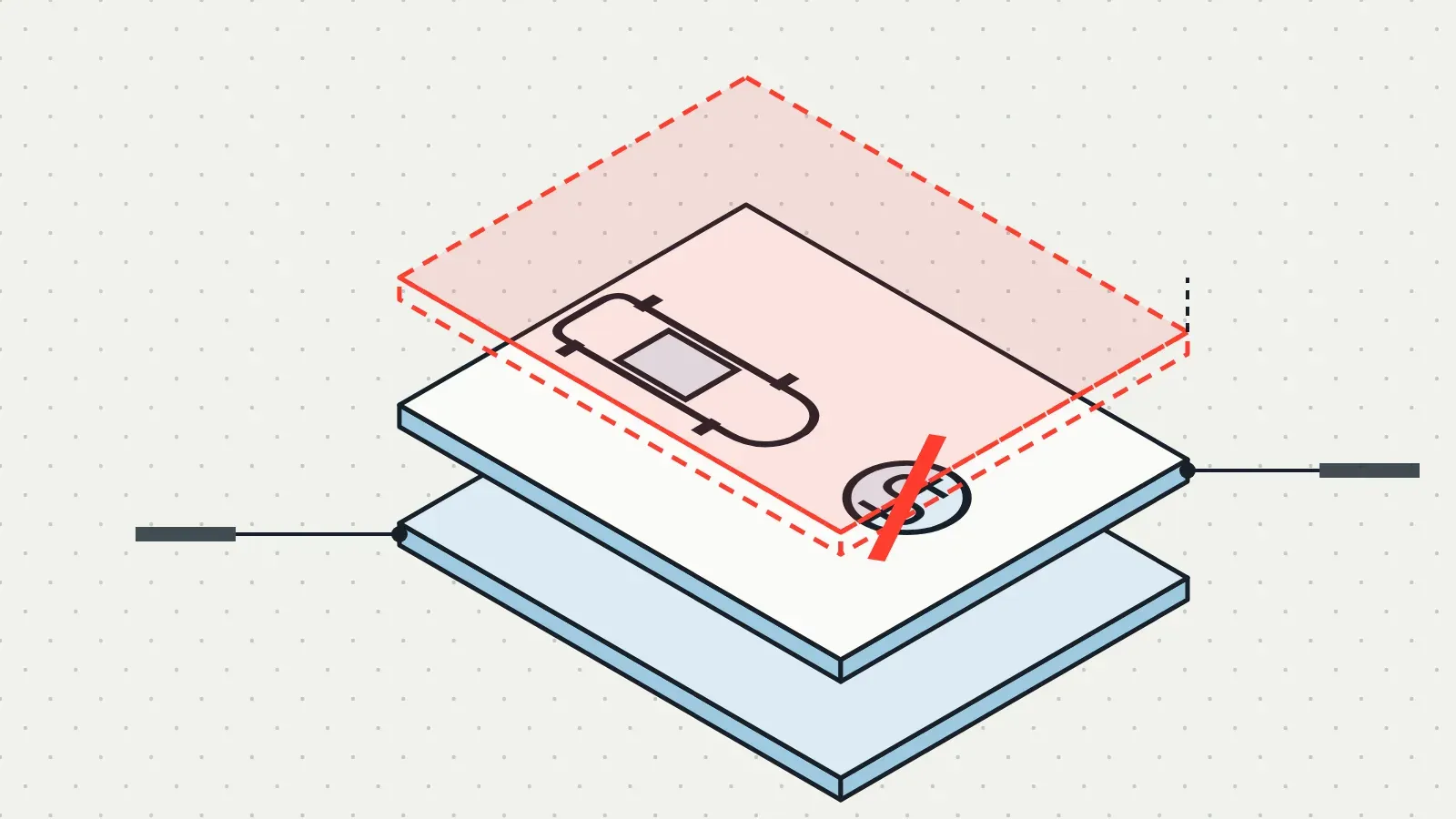
What underinsured motorist coverage promises
Every state that requires liability insurance sets a minimum limit, and a driver may legally buy only that. When a driver with a $25,000 per-person limit causes a crash that costs you $90,000, their insurer pays $25,000 and stops. The rest is a claim against the driver personally, which often collects little. UIM is your own insurer's promise to pay that rest, up to the UIM limit on your declarations page.
The insurer pays what you could have recovered from the at-fault driver. You still need to show the other driver was at fault and what your injuries are worth. The Illinois Department of Insurance describes the basic design in one line: UIM pays the difference between your UIM limits and the at-fault driver's limits, when theirs are lower.
- Medical bills not paid by other coverage.
- Lost income while you recover.
- Pain and suffering and other non-economic losses, where state law allows them.
- Passengers in your car and, under many policies, you and resident relatives when riding elsewhere or on foot.
When a driver counts as underinsured
States and policies use two different tests. The test decides whether your UIM is even in play after a crash.
| Trigger | A driver is underinsured when | Example state |
|---|---|---|
| Limits test | Their liability limits are lower than your UIM limits | New Jersey (N.J.S.A. 17:28-1.1) |
| Damages test | Their liability limits are lower than your total damages | North Carolina (G.S. 20-279.21) |
Under a limits test, buying UIM equal to the state minimum adds little: the other driver already has at least that much. New Jersey makes the point by requiring insurers to offer UIM up to at least $250,000 per person and $500,000 per accident. Under a damages test, UIM can apply even when the other driver's limits match yours, as long as your injuries cost more than those limits.
Offset or added on
The second question is how much UIM pays once it applies. Georgia's statute shows both designs side by side, because a buyer there chooses between them.
Added on
Your limit sits on top of the other driver's coverage. In Georgia this is the default: it pays in excess of the at-fault driver's liability coverage, up to your limit, without exceeding your losses.
Reduced by (offset)
Your limit is reduced by what the other driver's insurer pays. In Georgia you get this version only by a written election; it costs less and pays less.
Take an at-fault driver with $25,000 of coverage, a $50,000 limit of your own and $100,000 of losses. Added on, you can collect $25,000 from their insurer and up to $50,000 from yours, $75,000 in all. Reduced by, your insurer pays only the $25,000 difference between the two limits, so you collect $50,000.
How UIM fits with the rest of your policy
UIM is usually sold next to uninsured motorist coverage, often as one UM/UIM line at one limit. In some states the UM coverage itself is defined to reach underinsured drivers. Either way, both pay your injuries; neither pays the people you hurt. That is bodily injury liability.
- PIP and MedPay pay first and fast. They answer for medical bills whoever caused the crash, with no fault decision. UIM comes later, for the larger claim.
- Health insurance pays medical bills but not lost income or pain and suffering, and it may seek repayment from what you recover.
- Damage to your car is not UIM's job. It goes to the other driver's property damage liability, your collision coverage, or UM property damage where the state has it.
Some states write offsets into the coverage itself. Kansas lets a policy reduce UM benefits by amounts paid under PIP or workers' compensation, and Wisconsin allows reducing clauses for payments by the at-fault party, workers' compensation and disability benefits. Colorado goes the other way: its UM/UIM is not reduced by the at-fault driver's insurance, your MedPay or health insurance.
How states treat UIM
The Insurance Information Institute notes that many states require UM and UIM. The rules range from mandatory at a set floor to optional with a notice. A few examples, from the statutes on each state menu page:
- Required, no rejection: Minnesota makes UM and UIM part of every policy at $25,000/$50,000 or more.
- Required, can be lowered: Connecticut sets UM/UIM at your liability limits unless you sign a form for less, never below 25/50.
- Included unless declined: on newer New York policies, SUM, the state's UIM layer, equals your bodily injury limits unless declined in writing.
- Optional with notice: Wisconsin insurers must tell you UIM is available; if you buy it, the minimum is $50,000/$100,000.
Many states also cap UIM at your own liability limits, so the usual way to raise it is to raise those first. Whether limits on several cars can be added together is a separate rule, covered in stacking UM and UIM.
How to choose a UIM limit
- Find your design. Read the UIM endorsement or election form for offset or added on, and for limits test or damages test.
- Match your liability limits. If you protect strangers at 100/300, the same figure for your own household is the usual starting point.
- Price two levels. The step from a minimum UIM limit to a higher one is a separate line on a quote; ask for both.
- Size the gap. The liability limits calculator shows what a serious claim can cost next to a minimum-limit policy.
A UIM claim waits for the other driver's insurer. Before you accept that insurer's limit in a settlement, read your UIM endorsement's conditions for any step it requires, such as written notice to your own insurer, and follow it. Ask your insurer in writing if the wording is unclear.
Questions drivers ask
Is underinsured motorist coverage the same as uninsured motorist coverage?
No, though they are often sold together. UM pays when the at-fault driver has no insurance or cannot be found. UIM pays when that driver has insurance but too little. See uninsured motorist coverage.
Does UIM pay if the other driver has the same limits as me?
Under a limits test, usually not: the other driver is not underinsured compared with your coverage. Under a damages test, as in North Carolina, it can, if your losses exceed the other driver's limits.
Does UIM cover damage to my car?
Usually not. UIM is an injury coverage. Car damage goes to the other driver's property damage liability, your collision coverage, or UM property damage where it applies.
Can I buy more UIM than my liability limits?
In many states, no; New Jersey and New York, for example, cap it at your own liability limits. Connecticut is an exception: on request, insurers must offer UM/UIM up to twice your bodily injury limits.
Drawn from
- Insurance Research Council — Uninsured and Underinsured Motorists: 2017–2023, news release (February 20, 2025)
- Illinois Department of Insurance — Auto insurance definitions (underinsured motorist)
- Insurance Information Institute — What is covered by a basic auto insurance policy?
- O.C.G.A. § 33-7-11, uninsured motorist coverage, added-on and reduced-by forms (2025 Code of Georgia, Justia)
- N.J.S.A. 17:28-1.1, UM/UIM definitions and limits (Justia, 2025 edition)
- N.C. Gen. Stat. §20-279.21(b)(4), underinsured motorist coverage
- Maryland Insurance Administration — Understanding enhanced underinsured motorist coverage (effective July 1, 2024)
Facts on this page were checked against these sources on November 15, 2026. State examples come from the statutes cited on our state menu pages; UIM wording differs by insurer, so read the endorsement on your own policy.
Have this coverage priced
CoverOath doesn't sell insurance. Answer five questions and CoverOath passes your request to licensed insurance agents and insurers, who can quote the coverage; you decide whether to buy anything.
- 1 The coverage you want priced.
- 2 Where an agent can reach you, and your consent.
- 3 A licensed insurance agent or insurer contacts you with a quote. Nothing is bought until you agree.
CoverOath is not paid by you. The licensed insurance agents and insurers who contact you set their own prices and terms. How we make money.
Adjacent layers
-
Core coverage
Uninsured motorist coverage (UM)
Pays your injuries when an uninsured or hit-and-run driver is at fault. Required in about 20 jurisdictions.
-
Fine print
Stacking UM/UIM coverage
Whether UM limits on several cars add up. Pennsylvania and Florida stack by default; California bans it.
-
Fine print
How much liability coverage you need
State floors run as low as 15/30/5. Size your limit to what you own and earn, then add an umbrella if needed.