Injury coverage
Medical payments coverage: a small, fast fund for crash medical bills
MedPay is one of the simplest promises in an auto policy: it pays medical bills after a crash, up to a modest limit, without asking who was at fault. Here is whom it pays, what it does not pay, and where states make it part of the policy.
By CoverOath Editorial Team Updated 6 min read
The promise, in short
Medical payments coverage (MedPay) pays reasonable medical and funeral costs for you, your passengers and, under many policies, household members hurt as pedestrians or in another car, whoever caused the crash. It usually does not pay lost income, which is the main difference from PIP. Limits are small; state minimums such as $1,000 or $2,000 a person are common. Maine and New Hampshire put MedPay on every policy, Colorado includes $5,000 unless you decline it in writing, and many other states leave it optional. Check your state menu.
- Pays
- Medical and funeral costs
- Fault
- Not a factor
- Required in
- Maine, New Hampshire
- California minimum
- $1,000 a person
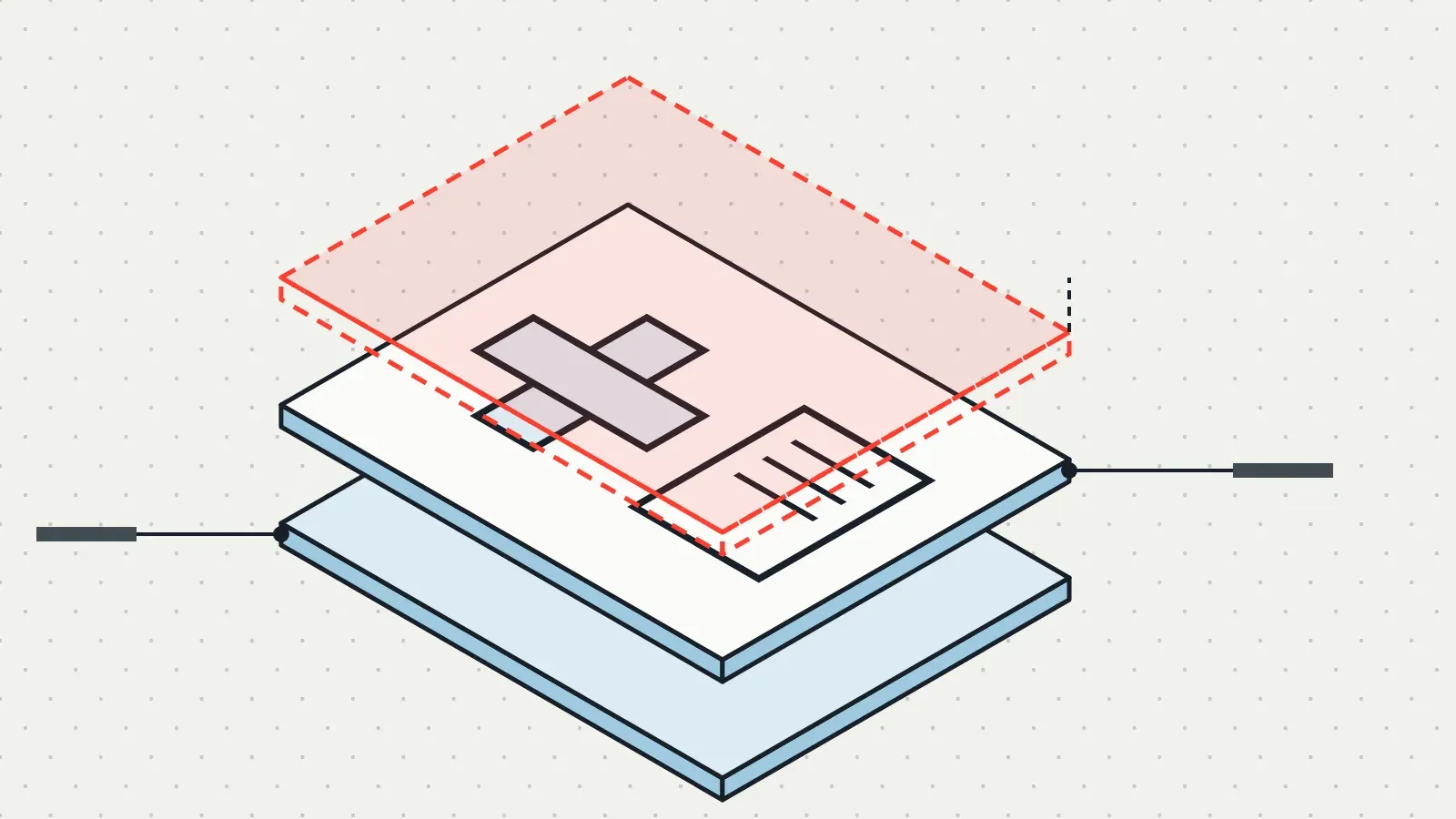
What MedPay promises
MedPay is first-party coverage: your own insurer pays, and nobody has to prove fault first. The Insurance Information Institute describes it as paying medical and funeral costs when a covered person is injured, no matter who is responsible. That makes it fast, but also small: it is built for the ambulance ride, the emergency room and the follow-up visits, not for a long recovery.
- The driver and passengers of your insured car.
- You and family members hurt while riding in someone else's car, or while walking or biking, as the Texas Department of Insurance describes it.
- Each injured person up to the per-person limit on your declarations page.
What it pays and what it does not
| Cost after a crash | Does MedPay usually pay? | Where else to look |
|---|---|---|
| Hospital, doctor, ambulance | Yes, up to the limit | Health insurance, PIP |
| Funeral costs | Yes, up to the limit | PIP death or funeral benefit |
| Lost wages | Usually not | PIP, disability insurance, a liability claim |
| Pain and suffering | No | A claim against the at-fault driver, UM or UIM |
| Damage to your car | No | Collision or the other driver's property damage liability |
Many policies also set a time window. The Maine Bureau of Insurance notes that many policies pay only expenses incurred within a set period after the accident, and New Hampshire's statute sets that window at three years from the injury. Read the medical payments part of your policy for its own window and exclusions.
MedPay or PIP
Medical payments
Medical and funeral costs, in most policies. Usually optional, with low starting limits, and sold as an extra line in many fault states.
Personal injury protection
Medical costs plus lost income, essential services and funeral or death benefits. Mandatory in no-fault states and included or offered in some others.
Where both exist, MedPay usually sits behind PIP. In New York, the Department of Financial Services says MedPay generally pays only where no-fault does not apply or after no-fault benefits run out, except for funeral costs. In Florida, optional MedPay may pick up part of the medical bills PIP leaves, depending on the policy wording. Arkansas folds medical payments into PIP as one of its three parts.
How states treat MedPay
Most states leave MedPay optional. A few go further, and in no-PIP states it is often the only first-party medical coverage on the policy. Examples from our state menu pages:
- Required: Maine, at least $2,000 a person; New Hampshire, at least $1,000 a person on every personal auto policy.
- Included unless declined: Colorado, $5,000 of benefits unless a named insured declines it in writing.
- Must be offered: Nevada and Wisconsin, at least $1,000; Massachusetts, at least $5,000.
- Optional: California, where the California Department of Insurance gives the lowest limit as $1,000 for each person injured.
Higher limits are usually available. The Maine Bureau mentions $5,000, $10,000 and $25,000 as limits insurers sell, and Colorado's $5,000 is a default, not a ceiling.
Conditions and exclusions to read
MedPay is short, but it still has conditions. They sit in the medical payments part of the policy, and they differ by insurer within what each state allows. Before you count on it, look for these:
- The time window for treatment after the crash, such as New Hampshire's three years or Virginia's usual three years.
- The definition of an insured person, which decides whether relatives, guests and pedestrians are covered.
- Vehicle and use exclusions: check whether the wording leaves out cars you own but did not list, or driving for pay.
- Reasonable and necessary care: the insurer may question bills it finds excessive or unrelated to the crash.
The name can also mislead. Virginia calls the coverage medical expense benefits, and its Bureau of Insurance guide says it can include an income loss benefit. New Hampshire's MedPay rule does not reach commercial policies insuring more than four cars, or garage and trucking policies. The label on your declarations page matters less than the wording behind it.
MedPay and your health insurance
If you have health insurance, MedPay can pay the bills your plan leaves you: deductibles, copays and coinsurance. It can also pay for passengers who have no health coverage, or whose plans would bill you. Whether MedPay pays first or after health insurance, and whether either can claim money back from the other, depends on the policy, the health plan and state law.
How to choose a MedPay limit
- Check your health plan's deductible. A MedPay limit near that deductible covers the part you would pay first.
- Count your usual passengers. The limit applies to each injured person, and passengers may lack their own coverage.
- Look at what else pays. In a PIP state, MedPay adds less; in a no-PIP state, it may be your only fault-free medical coverage.
- Price two limits. Ask for a quote at the minimum and one step up, then weigh it with your UM limits, which pay the larger claims.
Questions drivers ask
Does MedPay pay if I caused the crash?
Yes. MedPay pays covered medical costs regardless of fault, for you and others insured under the policy, up to the per-person limit.
Does MedPay cover lost wages?
Usually not. MedPay pays medical and funeral costs; Virginia's version can include an income loss benefit. Lost income is paid by PIP where you have it, or through a claim against the at-fault driver.
Am I covered by MedPay as a pedestrian?
Often yes. The Texas Department of Insurance says MedPay also pays if you are hurt walking or biking, and the Maine Bureau of Insurance says the same for household members. The policy's definition of an insured person decides it.
Can I have MedPay and PIP on the same policy?
In some states, yes. MedPay then usually pays after PIP or for costs PIP does not cover; New York's insurance department describes it that way. Ask your insurer how the two coordinate.
Drawn from
- Insurance Information Institute — What is covered by a basic auto insurance policy?
- Texas Department of Insurance — Auto insurance guide
- California Department of Insurance — Automobile insurance guide (medical payments)
- Maine Bureau of Insurance — Consumer's guide to personal auto insurance (updated September 28, 2021)
- New Hampshire RSA 264:16 (medical payments coverage)
- C.R.S. §10-4-635, medical payments coverage (Justia, 2023 edition)
- Virginia Bureau of Insurance — Consumer's Guide for Auto Insurance (medical expense benefits)
- New York Department of Financial Services — Auto insurance (no-fault and medical payments)
Facts on this page were checked against these sources on November 15, 2026. State limits come from the statutes and insurance department guides cited on our state menu pages; how MedPay coordinates with health insurance depends on your policy and plan.
Have this coverage priced
CoverOath doesn't sell insurance. Answer five questions and CoverOath passes your request to licensed insurance agents and insurers, who can quote the coverage; you decide whether to buy anything.
- 1 The coverage you want priced.
- 2 Where an agent can reach you, and your consent.
- 3 A licensed insurance agent or insurer contacts you with a quote. Nothing is bought until you agree.
CoverOath is not paid by you. The licensed insurance agents and insurers who contact you set their own prices and terms. How we make money.
Adjacent layers
-
Core coverage
Personal injury protection (PIP)
Pays medical bills and lost income whoever caused the crash. Mandatory in the 12 no-fault states.
-
Core coverage
Uninsured motorist coverage (UM)
Pays your injuries when an uninsured or hit-and-run driver is at fault. Required in about 20 jurisdictions.
-
Fine print
Who is covered on your policy
Named insured, resident relatives, drivers you lend the car to: how far coverage reaches and where it stops.