Excess liability
Umbrella insurance: one more plate on top of the liability stack
Your car policy pays the people you hurt up to its liability limit and stops. An umbrella policy starts at that line. Here is how the two fit, what the umbrella insurer asks you to carry underneath, and what it does not pay.
By CoverOath Editorial Team Updated 7 min read
The promise, in short
A personal umbrella policy is extra liability coverage that starts where your auto, homeowners or renters liability limit ends. If a court or settlement puts you on the hook for more than your car policy pays, the umbrella pays the rest, up to its own limit. It can also cover some claims the underlying policies don't, such as libel and slander. Insurers sell it only on top of a set floor: the Insurance Information Institute says most want about $250,000 of auto liability and about $300,000 on a homeowners policy. It pays other people, not your own injuries or your own car. See how much liability coverage you need before you add one.
- Pays
- Liability above auto limit
- Auto limit insurers want
- Often about $250,000
- Home limit insurers want
- Often about $300,000
- Does not pay
- Your own injuries or car
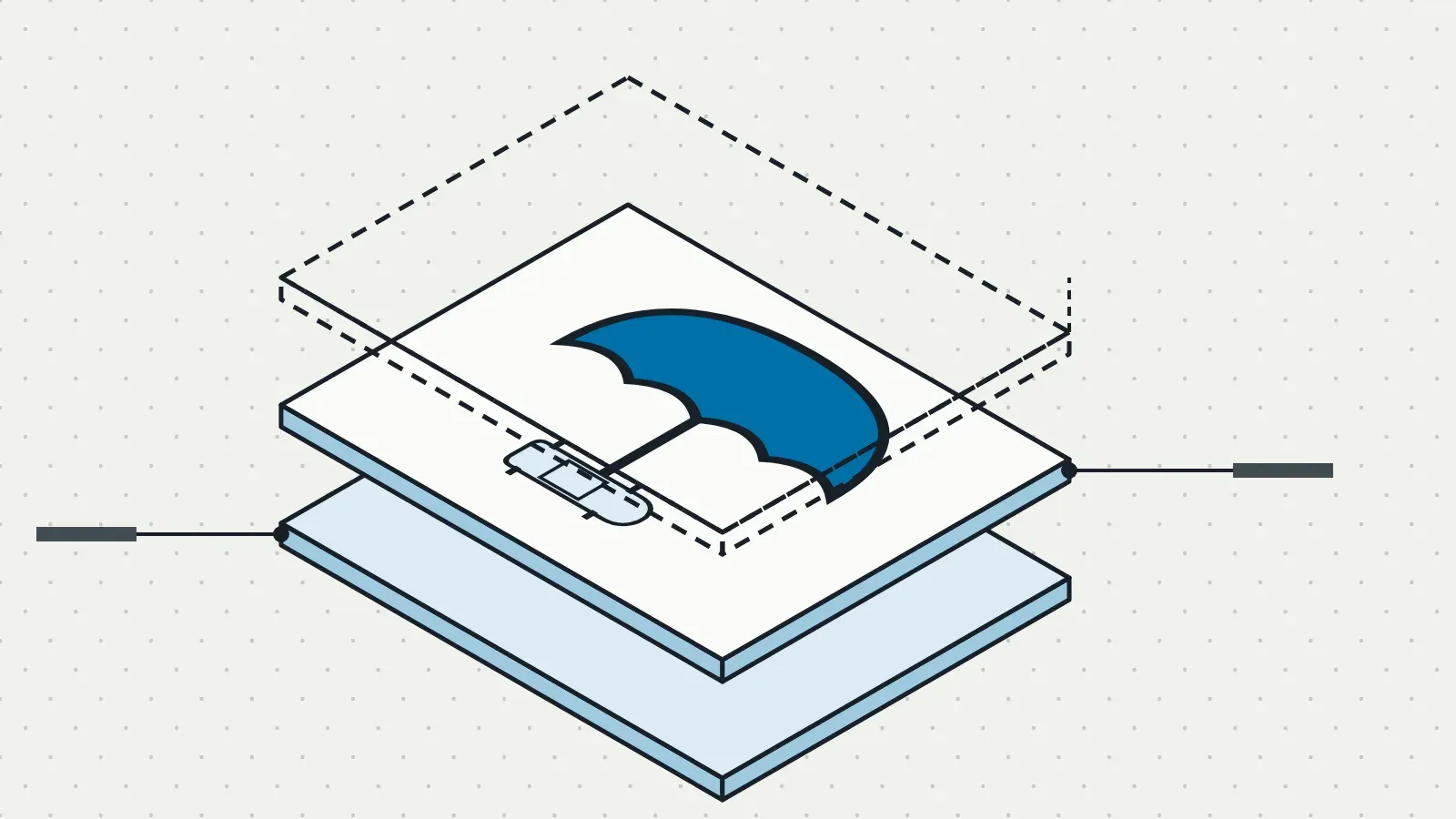
What an umbrella policy promises
The liability part of your car policy has a ceiling. Bodily injury liability pays the people you injure up to a per-person and per-accident limit, and property damage liability pays for what you damage up to its own limit. Above those numbers, a judgment or settlement is yours to pay from savings, property or future wages.
An umbrella policy is a separate contract that sits on top. The III describes it as coverage that kicks in when you reach the limit of the underlying liability coverage on your auto, homeowners, renters or condo policy. The NAIC gives the example of an umbrella extending liability protection to $1 million or more above the underlying limit.
- What triggers it: a liability claim against you that is larger than the underlying policy's limit, or a covered claim the underlying policy does not cover at all.
- Whom it pays: the people who make the claim against you, never you.
- What caps it: the umbrella's own limit, printed on its declarations page.
How the layers stack in a claim
| Layer | Limit | Pays in this example |
|---|---|---|
| Judgment for one injured person | — | $600,000 owed |
| Auto bodily injury liability | $250,000 per person | $250,000, first |
| Umbrella policy | $1,000,000 | $350,000, after the auto limit is used up |
| You | — | $0 in this example |
The auto insurer pays first, up to its full limit. The umbrella answers for the part above, and only for that part: it does not share the first $250,000 or replace the auto policy. Without the umbrella, the $350,000 in this example would be a personal debt. The same order applies to a claim under a homeowners or renters policy: the underlying limit first, the umbrella after.
Split limits matter here. If your auto policy shows 250/500/100, the umbrella starts above $250,000 for any one injured person, above $500,000 for all injuries in one crash and above $100,000 for property damage. See split limits vs. a combined single limit for how to read those numbers.
The underlying limits an insurer requires
An umbrella insurer will not sit on top of a thin floor. Each insurer sets its own required underlying limits. The III says most insurers want about $250,000 of liability on your auto policy and about $300,000 of liability on a homeowners policy. Ask whether the auto figure is per person, per accident or a combined single limit; insurers word it differently. These are rules of the umbrella insurer, not of state law, so two companies can ask for different floors. The floor also shapes the price of the whole stack: raising your auto limits to meet it adds a cost to the car policy on top of the umbrella premium, so compare the two together.
- Ask the umbrella insurer for its required limits for each underlying policy: auto, homeowners or renters, and any boat or other vehicle you own.
- Compare them with your declarations pages. Raise any limit that falls short before the umbrella starts.
- Keep them there. If you later lower an auto limit or let a policy lapse, ask how the umbrella treats the gap; you may have to pay the difference yourself.
- Run the numbers. The liability limits calculator shows what a large claim would leave uncovered at each level.
What an umbrella does not pay
- Your own injuries. That is health coverage, PIP or MedPay, and uninsured motorist coverage when the other driver is at fault.
- Your own car. Damage to it goes to collision or comprehensive.
- Business activity. The III notes that a personal umbrella typically excludes claims arising from business activity, so it is not a substitute for commercial auto coverage.
- Anything the policy excludes. Umbrella forms have their own exclusion lists; read them, including the definitions of who is insured.
If you drive for work or use a vehicle mainly in a business, look at commercial auto insurance instead of relying on a personal umbrella.
Who tends to consider one
The III frames the umbrella as protection for people whose assets a lawsuit settlement could wipe out, and the NAIC notes that an insurer or agent may suggest one as your assets grow. Situations worth a look include home equity, savings and investments well above your liability limits, an income a court judgment could reach, or a household with several drivers. None of these makes an umbrella necessary; they are reasons to compare what a large claim would leave you owing with and without one.
Raise the auto limits first
If your auto limits sit near the state minimum, the umbrella insurer will ask you to raise them anyway. That step alone may be enough for a modest net worth.
Add the umbrella
When your assets or income are well above what the underlying limits protect, the umbrella adds a much larger layer on top.
Questions drivers ask
Does an umbrella policy cover car accidents?
Yes, for liability. When you cause a crash and the claim is larger than your auto liability limit, the umbrella pays the rest up to its own limit. It does not pay for your own injuries or your own car.
What auto limits do I need before I can buy an umbrella?
Each insurer sets its own. The Insurance Information Institute says most want about $250,000 of auto liability and about $300,000 on a homeowners policy. Ask the umbrella insurer for its exact numbers.
Does an umbrella cover a car I use for business?
Usually not. Personal umbrellas typically exclude business activity. A vehicle used mainly in a business belongs on a commercial auto policy.
Does an umbrella cover claims my car policy doesn't?
Sometimes. The III notes that umbrella policies can cover some other types of claims, such as libel and slander. The policy's own coverage and exclusion lists decide which.
Drawn from
- Insurance Information Institute — What is an umbrella liability policy?
- NAIC — Consumer Insight: Your annual insurance check-up
- Insurance Information Institute — Business vehicle insurance (small business owner's guide)
Facts on this page were checked against these sources on November 15, 2026. Required underlying limits are set by each umbrella insurer; the III figures describe what most insurers ask for, not a rule.
Have this coverage priced
CoverOath doesn't sell insurance. Answer five questions and CoverOath passes your request to licensed insurance agents and insurers, who can quote the coverage; you decide whether to buy anything.
- 1 The coverage you want priced.
- 2 Where an agent can reach you, and your consent.
- 3 A licensed insurance agent or insurer contacts you with a quote. Nothing is bought until you agree.
CoverOath is not paid by you. The licensed insurance agents and insurers who contact you set their own prices and terms. How we make money.
Adjacent layers
-
Fine print
How much liability coverage you need
State floors run as low as 15/30/5. Size your limit to what you own and earn, then add an umbrella if needed.
-
Core coverage
Bodily injury liability
Pays other people's injury claims when you cause a crash, up to a per-person and a per-accident limit.
-
Fine print
Split limits vs. combined single limit
100/300/100 caps each claim type; a $300,000 CSL is one pool. Worked crashes show where each runs out.