UM + UIM required
Maine coverage menu: high minimums, MedPay and UM/UIM that cannot go below 50/100
A basic Maine policy is more than liability. Liability starts at 50/100/25, medical payments and uninsured/underinsured motorist coverage are required, and a newer rule adds a small towing benefit.
By CoverOath Editorial Team Updated 6 min read
The promise, in short
A Maine policy must carry 50/100/25 liability (or a $125,000 combined single limit), $2,000 of medical payments coverage, uninsured/underinsured motorist coverage of at least 50/100, and up to $500 for towing and storage when police have your car towed after an accident. UM/UIM must match your liability limits unless you reject the higher amount in writing; it can never go below 50/100. Maine has no PIP. The Maine Bureau of Insurance: 800-300-5000.
- Minimum liability
- 50/100/25
- MedPay
- Required, $2,000
- UM/UIM
- Required at 50/100
Maine coverage menu
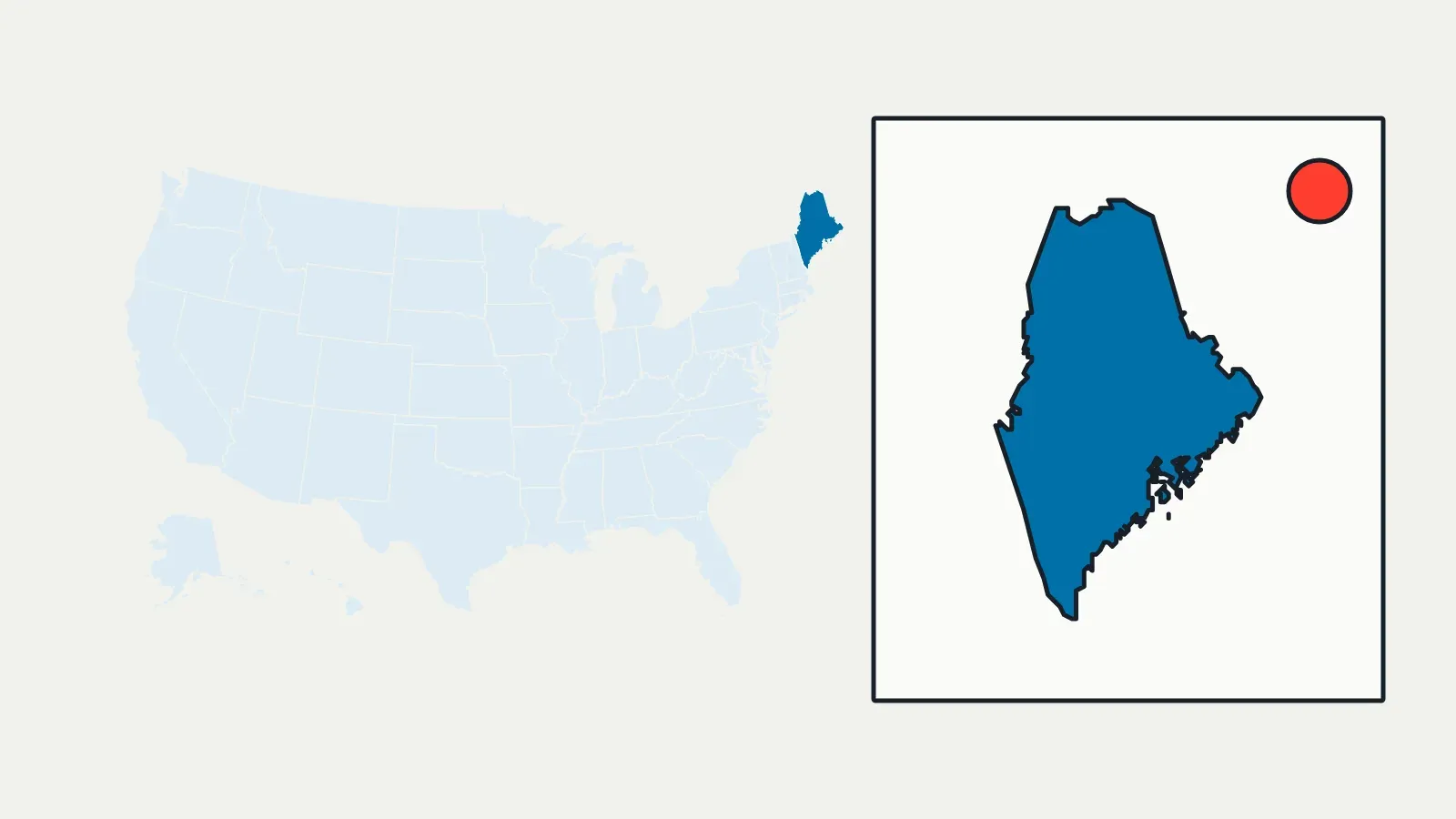
What a Maine policy must carry
Title 29-A, section 1605 of the Maine statutes lists the amounts a policy must carry to count as proof of financial responsibility. The Bureau of Insurance publishes the same figures and accepts a combined single limit of $125,000 in place of the split liability limits.
| Coverage | Minimum | Who it pays |
|---|---|---|
| Bodily injury liability | $50,000 per person / $100,000 per accident | People you injure |
| Property damage liability | $25,000 | Other people's property |
| Medical payments | $2,000 per person | You and people in your car |
| Uninsured/underinsured motorist | $50,000 / $100,000 | You, your household and passengers |
| Towing and storage | Up to $500 per accident | Tow of your car ordered by police |
A 50/100/25 floor still leaves room for a gap: one serious injury can still pass $50,000, and anything above your limit is yours to pay. If you finance or lease, the lender will also require collision and comprehensive. The liability limits page explains how to size the number.
Medical payments instead of PIP
Maine has no personal injury protection system. Instead, every policy includes medical payments coverage of at least $2,000 per person. The Bureau says it pays reasonable medical and funeral expenses for people hurt in your car, even if you caused the crash, and for household members hit while walking, biking or riding in another car. Insurers sell higher limits, such as $5,000, $10,000 or $25,000. Many policies pay only expenses incurred within a set period after the accident.
Uninsured and underinsured motorist coverage
Title 24-A, section 2902 requires uninsured and underinsured motorist coverage for vehicles registered or principally garaged in Maine. A vehicle counts as underinsured when its bodily injury limits are lower than the minimum or lower than your own UM limits.
Matches your liability
If you buy liability above 50/100, UM/UIM must equal it unless you reject the higher amount.
Rejection rules
The rejection must be in writing on the insurer's form, signed and dated, with language the law prescribes, before the policy takes effect.
The floor
UM/UIM can never drop below $50,000/$100,000, or a $100,000 combined single limit.
UM/UIM pays injuries to you, your passengers and household members, including when you are walking, biking or riding in another car. It does not pay the other driver's injuries or damage to your car. The Bureau also notes that umbrella policies usually do not cover UM claims, so a high umbrella does not replace high UM.
Maine had the lowest uninsured driver rate in the country in 2023, 5.7%, according to the Insurance Research Council. Underinsured drivers are the larger risk here: a driver at 50/100 who badly injures you may still leave a gap that only your UIM fills.
Stacking and the towing rule
Section 2902 does not say whether UM/UIM limits on several cars or policies can be added together, and the Bureau's guide does not address it. Read the limit of liability section of your policy; how stacking works explains the terms.
Rideshare and car sharing in Maine
The Bureau's guide says either the driver or the ride company must carry insurance meeting the minimum liability limits, but the law does not require collision or comprehensive, so your car may be uncovered while you drive for an app. Personal policies typically exclude the time you are available for rides; a rideshare endorsement can fill that gap.
Where to check and complain
- Compare UM/UIM to liability on your declarations page; if UM is lower, a signed rejection should be on file.
- Check the MedPay limit and decide whether $2,000 is enough next to your health plan.
- Contact the Maine Bureau of Insurance at 800-300-5000 (207-624-8475) or file a complaint online.
Questions drivers ask
Can I drop uninsured motorist coverage in Maine?
No. Every Maine policy must carry at least 50/100 of UM/UIM. You can only reject UM/UIM above that floor, in writing.
Is medical payments coverage required in Maine?
Yes. Maine requires at least $2,000 per person. Higher limits are optional.
Does Maine require PIP?
No. Maine uses required medical payments coverage instead of a PIP system.
Will my policy pay for a police-ordered tow in Maine?
Yes, up to $500 per accident for reasonable towing and storage of the insured vehicle, under 29-A M.R.S. §1605-B.
Drawn from
- Maine Bureau of Insurance — Insurance required by law
- Maine Bureau of Insurance — Consumer's guide to personal auto insurance (updated September 28, 2021)
- 29-A M.R.S. §1605 (required amounts) and §1605-B (towing and storage)
- 24-A M.R.S. §2902 (uninsured and underinsured vehicle coverage)
- Insurance Research Council — Uninsured and underinsured motorists, 2017–2023 (news release)
Facts on this page were checked against these sources on November 15, 2026. The towing and storage requirement was added by P.L. 2023, c. 395.
Have this coverage priced
CoverOath doesn't sell insurance. Answer five questions and CoverOath passes your request to licensed insurance agents and insurers, who can quote the coverage; you decide whether to buy anything.
- 1 The coverage you want priced.
- 2 Where an agent can reach you, and your consent.
- 3 A licensed insurance agent or insurer contacts you with a quote. Nothing is bought until you agree.
CoverOath is not paid by you. The licensed insurance agents and insurers who contact you set their own prices and terms. How we make money.
Adjacent layers
-
Core coverage
Underinsured motorist coverage (UIM)
Pays your injuries above the at-fault driver's limit. Added-on UIM stacks on their payment; offset UIM subtracts it.
-
Core coverage
Medical payments coverage (MedPay)
Pays crash medical and funeral costs for you and passengers, whoever was at fault. Required in Maine and New Hampshire.
-
Fine print
How much liability coverage you need
State floors run as low as 15/30/5. Size your limit to what you own and earn, then add an umbrella if needed.