Offer, reject in writing
Florida coverage menu: PIP and property damage required, bodily injury liability optional for most drivers
Florida is still a no-fault state. A registered car needs personal injury protection and property damage liability, and uninsured motorist coverage rides along with bodily injury liability unless you reject it. Here is what each line promises.
By CoverOath Editorial Team Updated 6 min read
The promise, in short
Florida requires $10,000 of personal injury protection and $10,000 of property damage liability on a car registered in the state. Bodily injury liability is not required to register most private cars. If your policy has bodily injury liability, it must include uninsured motorist coverage at the same limits unless a named insured rejects it or picks lower limits in writing. Florida's 2026 bills to repeal no-fault died in committee. The Department of Financial Services helpline is 1-877-693-5236.
- Minimum liability
- $10,000 property damage
- PIP
- $10,000 required
- UM/UIM
- Offered, reject in writing
Florida coverage menu
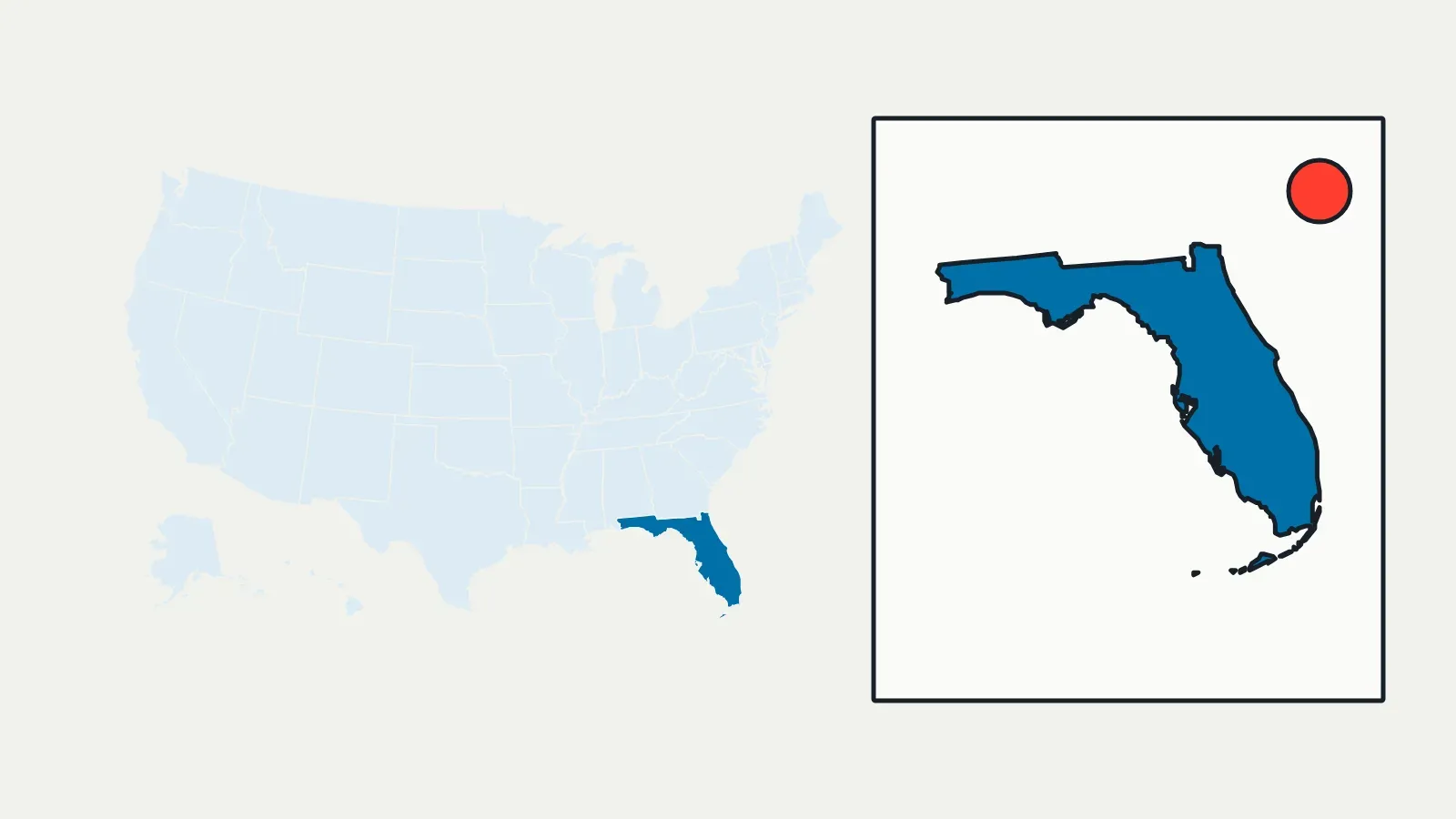
What a Florida policy must carry
The owner of a car that must be registered in Florida has to keep security in force continuously. For most private cars that means two coverages: personal injury protection for your own injuries and property damage liability for damage you cause to other people's property. A nonresident whose car has been in Florida more than 90 days in the past 365 must carry the same security.
| Coverage | Minimum | What it pays |
|---|---|---|
| Personal injury protection | $10,000 | Your own medical costs and lost income, whoever caused the crash |
| Property damage liability | $10,000 | Damage you cause to others' cars and property |
| Bodily injury liability | Not required for most private cars | Injuries you cause to others |
Without bodily injury liability, nothing on your policy pays the people you injure. Florida's financial responsibility law can require it later, for example to reinstate a suspended license, and taxicabs must carry $125,000/$250,000 plus $50,000 property damage. Lenders and many drivers choose it anyway.
What Florida PIP pays
- Medical benefits: 80% of reasonable expenses for medically necessary care, within the $10,000 limit.
- Disability benefits: 60% of lost gross income and earning capacity, plus some household services.
- Death benefit: $5,000 per person, on top of the medical and disability benefits.
Medical payments coverage is optional in Florida. Depending on the policy wording, it may pay part of the medical bills PIP leaves, up to its own limit.
Uninsured motorist coverage and stacking
Under Fla. Stat. § 627.727, a policy that provides bodily injury liability for a car registered or garaged in Florida must include uninsured motorist coverage, which in Florida also covers underinsured drivers. The limit equals your bodily injury limits unless a named insured rejects UM or chooses lower limits on a state-approved form. That signature binds everyone on the policy, and the insurer must remind you of the options at least once a year.
If your policy has no bodily injury liability, the insurer does not have to include UM. It must still make UM available on written request, up to your bodily injury limits or $1 million, whichever is less.
Stacked (the default)
The Department of Financial Services explains that Florida law stacks UM across your insured cars unless you choose otherwise. Three cars at 50/100 stack to $150,000 a person and $300,000 a crash.
Non-stacked (by signed form)
You can accept limitations that keep UM to one vehicle's limit, on an approved form. Insurers must file rates that cut the UM premium by at least 20% for this choice.
A non-stacking choice carries over to renewals until you ask to delete it and pay the higher premium. See how stacking works.
Florida rules for glass and rideshare
- Windshields: Fla. Stat. § 627.7288 says the deductible does not apply to windshield damage on a policy that includes comprehensive coverage. The Department of Financial Services also notes that, for policies issued or renewed on or after July 1, 2023, assigning your glass repair benefits to a shop is prohibited. See full glass coverage.
- Rideshare: while the app is on and no ride is accepted, a TNC driver needs $50,000/$100,000/$25,000 liability plus PIP and UM; during a ride, $1 million. A personal policy may exclude all coverage while you are logged on. See the rideshare endorsement.
Where to check and complain
- Read your declarations page for PIP, property damage and any bodily injury and UM limits, and whether UM is stacked.
- Ask the insurer for signed forms if UM is missing, lower than your liability limits or marked non-stacked.
- Call the Florida Department of Financial Services Insurance Consumer Helpline at 1-877-693-5236, or (850) 413-3089 from out of state.
Questions drivers ask
Did Florida repeal PIP?
No. The 2026 Florida Statutes still require PIP, and the 2026 repeal bills, SB 522 and HB 769, died in committee in March 2026.
Do I need bodily injury liability in Florida?
Not to register most private cars. The law can require it later, for example to reinstate a license, and without it your policy pays nothing to people you injure.
Is uninsured motorist coverage required in Florida?
No. It is included on any policy with bodily injury liability unless a named insured rejects it or selects lower limits on an approved form.
Do I pay a deductible to replace a windshield in Florida?
Not on a policy that includes comprehensive coverage: Florida law says the deductible does not apply to windshield damage.
Drawn from
- Florida HSMV — Insurance requirements
- Florida Statutes § 627.736 (required PIP benefits)
- Florida Statutes § 627.727 (uninsured motorist coverage, stacking)
- Florida Statutes § 627.7288 (windshield deductible)
- Florida Statutes § 627.748 (transportation network companies)
- Florida Department of Financial Services — Personal automobile insurance overview
- Florida Senate — SB 522 (2026), Motor Vehicle Insurance
Facts on this page were checked against these sources on November 15, 2026. PIP is still in the 2026 Florida Statutes; SB 522, which would have repealed the No-Fault Law, died in the Senate Banking and Insurance Committee on March 13, 2026.
Have this coverage priced
CoverOath doesn't sell insurance. Answer five questions and CoverOath passes your request to licensed insurance agents and insurers, who can quote the coverage; you decide whether to buy anything.
- 1 The coverage you want priced.
- 2 Where an agent can reach you, and your consent.
- 3 A licensed insurance agent or insurer contacts you with a quote. Nothing is bought until you agree.
CoverOath is not paid by you. The licensed insurance agents and insurers who contact you set their own prices and terms. How we make money.
Adjacent layers
-
Core coverage
Personal injury protection (PIP)
Pays medical bills and lost income whoever caused the crash. Mandatory in the 12 no-fault states.
-
Core coverage
Uninsured motorist coverage (UM)
Pays your injuries when an uninsured or hit-and-run driver is at fault. Required in about 20 jurisdictions.
-
Add-on
Full glass coverage
Removes or lowers the comprehensive deductible on glass. Florida, Kentucky and South Carolina set it at $0 by law.