UM required
Wisconsin coverage menu: liability and UM required, MedPay and UIM offered
Wisconsin requires liability and uninsured motorist coverage. Insurers must offer medical payments coverage and tell you underinsured coverage is available. Since 2011, policies may also limit stacking and reduce UM/UIM by other payments.
By CoverOath Editorial Team Updated 6 min read
The promise, in short
Wisconsin requires 25/50/10 liability: $25,000 per injured person, $50,000 per crash and $10,000 for property damage. Every policy must also carry uninsured motorist coverage of at least $25,000 a person and $50,000 a crash, for bodily injury only. Underinsured motorist coverage is optional; insurers must tell you it is available, and if you buy it the minimum is $50,000/$100,000. Insurers must offer medical payments coverage of at least $1,000, which you may decline. Since November 1, 2011, policies may bar stacking. The Office of the Commissioner of Insurance takes complaints at 800-236-8517.
- Minimum liability
- 25/50/10
- PIP/MedPay
- $1,000 MedPay, optional
- UM/UIM
- UM required; UIM optional
Wisconsin coverage menu
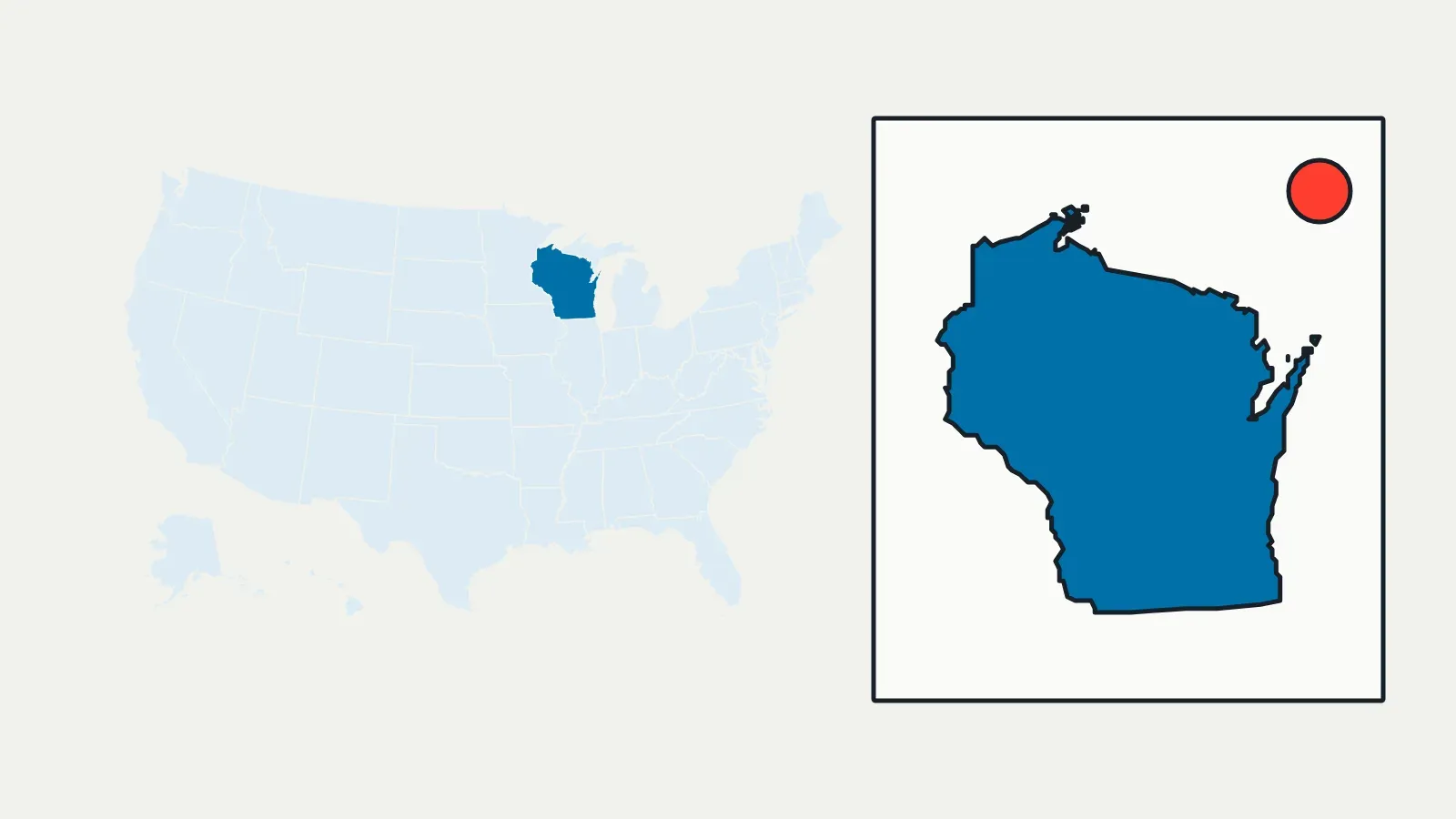
What a Wisconsin policy must carry
Wisconsin requires a liability policy on vehicles driven on its roads, and that policy must include uninsured motorist coverage. Liability pays people you injure and property you damage. UM pays your injuries when the driver at fault has no insurance.
| Coverage | Minimum | Whom it pays |
|---|---|---|
| Bodily injury liability, per person / per crash | $25,000 / $50,000 | People you injure |
| Property damage liability | $10,000 | Other people's cars and property |
| Uninsured motorist, bodily injury | $25,000 / $50,000 | You and people insured on your policy |
| Underinsured motorist, if bought | $50,000 / $100,000 | You and people insured on your policy |
The duty to insure comes from Wis. Stat. §344.62, which also makes you carry proof of insurance. The Legislative Council's 2024 summary of the law lists the same limits as OCI.
OCI describes the UM minimum as covering bodily injury only, so damage to your car from an uninsured driver usually goes through collision coverage and its deductible. The liability limits page explains how people choose limits above the floor.
What insurers must offer
Medical payments
Insurers must offer MedPay, and you can decline it. If you take it, the minimum limit is $1,000 a person. It pays medical bills whoever caused the crash.
Underinsured motorist
Not mandatory. Insurers must give notice that it is available when they deliver the policy, and you may reject it. If you buy it, the minimum is $50,000 a person and $100,000 a crash.
Wisconsin has no personal injury protection law. A $1,000 MedPay limit covers little after a hospital visit; many insurers sell higher limits. UIM is the coverage that pays when the other driver has insurance but not enough, and with a 25/50 liability floor in the state, that gap is easy to reach.
If you turned UIM down when the policy started, you can ask your insurer to add it; put the request in writing so the change is on record. Because the minimum UIM limit is $50,000/$100,000, adding it means buying more than the state's liability floor, which is the point: it pays the part of your loss above what a minimum-limits driver can pay.
The 2011 changes still shape your policy
2011 Wisconsin Act 14 rewrote the state's auto insurance rules for policies issued or renewed on or after November 1, 2011. The Office of the Commissioner of Insurance summarized the changes in a bulletin:
- UIM became optional. It had been mandatory; insurers now give notice and you may reject it.
- UM minimums dropped to $25,000 a person and $50,000 a crash.
- MedPay minimums dropped to $1,000 a person, and the coverage may be rejected.
- Stacking of up to three vehicles is no longer required, and anti-stacking language is allowed.
- Reducing clauses are allowed. A policy may reduce UM or UIM limits by amounts paid by a responsible party, by workers' compensation, and by disability benefits.
Stacking in Wisconsin
Wisconsin used to require stacking of UM and UIM limits for up to three vehicles. Since November 1, 2011, a policy may say that its limit is the most it pays, no matter how many cars are insured. If your policy has that language, two cars with $100,000 of UM each still give you $100,000 for one crash, not $200,000. See how stacking works.
Where to check and complain
- Read your declarations page for UM, UIM and MedPay limits.
- Read the limit of liability section of your policy for anti-stacking and reducing clauses.
- Contact the Wisconsin Office of the Commissioner of Insurance at 800-236-8517 if an insurer will not explain a coverage or a claim decision.
Questions drivers ask
Is underinsured motorist coverage required in Wisconsin?
No. Insurers must tell you it is available, and you may reject it. If you buy it, the minimum is $50,000 a person and $100,000 a crash.
Is MedPay required in Wisconsin?
Insurers must offer at least $1,000 of medical payments coverage, but you can decline it.
Can I stack UM coverage in Wisconsin?
Only if your policy allows it. Since November 1, 2011, Wisconsin law permits anti-stacking language, so the policy's limit of liability section decides.
Drawn from
- Wisconsin OCI — Frequently asked questions, automobile insurance (minimums, UM, UIM, MedPay)
- Wisconsin OCI — Bulletin of July 15, 2011 on 2011 Wisconsin Act 14 (Wis. Stat. §632.32: stacking, reducing clauses, UIM)
- Wisconsin Legislative Council — Issue brief: auto insurance requirements, April 2024 (Wis. Stat. §§344.62, 632.32(4), (4m))
Facts on this page were checked against these sources on November 15, 2026. Wisconsin's current UM, UIM, MedPay and stacking rules date from 2011 Wisconsin Act 14, for policies issued or renewed on or after November 1, 2011.
Have this coverage priced
CoverOath doesn't sell insurance. Answer five questions and CoverOath passes your request to licensed insurance agents and insurers, who can quote the coverage; you decide whether to buy anything.
- 1 The coverage you want priced.
- 2 Where an agent can reach you, and your consent.
- 3 A licensed insurance agent or insurer contacts you with a quote. Nothing is bought until you agree.
CoverOath is not paid by you. The licensed insurance agents and insurers who contact you set their own prices and terms. How we make money.
Adjacent layers
-
Core coverage
Uninsured motorist coverage (UM)
Pays your injuries when an uninsured or hit-and-run driver is at fault. Required in about 20 jurisdictions.
-
Core coverage
Medical payments coverage (MedPay)
Pays crash medical and funeral costs for you and passengers, whoever was at fault. Required in Maine and New Hampshire.
-
Fine print
Stacking UM/UIM coverage
Whether UM limits on several cars add up. Pennsylvania and Florida stack by default; California bans it.