Offer, reject in writing
Texas coverage menu: liability required, PIP and UM included unless you sign them away
Texas law requires only liability, but every policy arrives with personal injury protection and uninsured motorist coverage on it. Here is what each line means and what a rejection form takes away.
By CoverOath Editorial Team Updated 6 min read
The promise, in short
Texas requires 30/60/25 liability: $30,000 per injured person, $60,000 per crash and $25,000 for property damage. Insurers must also put personal injury protection (at least $2,500 a person) and uninsured/underinsured motorist coverage on the policy, and they come off only if you reject them in writing. Medical payments coverage is optional. The Texas Department of Insurance regulates auto insurers and takes complaints at 800-252-3439.
- Minimum liability
- 30/60/25
- PIP
- $2,500, reject in writing
- UM/UIM
- Offered, reject in writing
Texas coverage menu
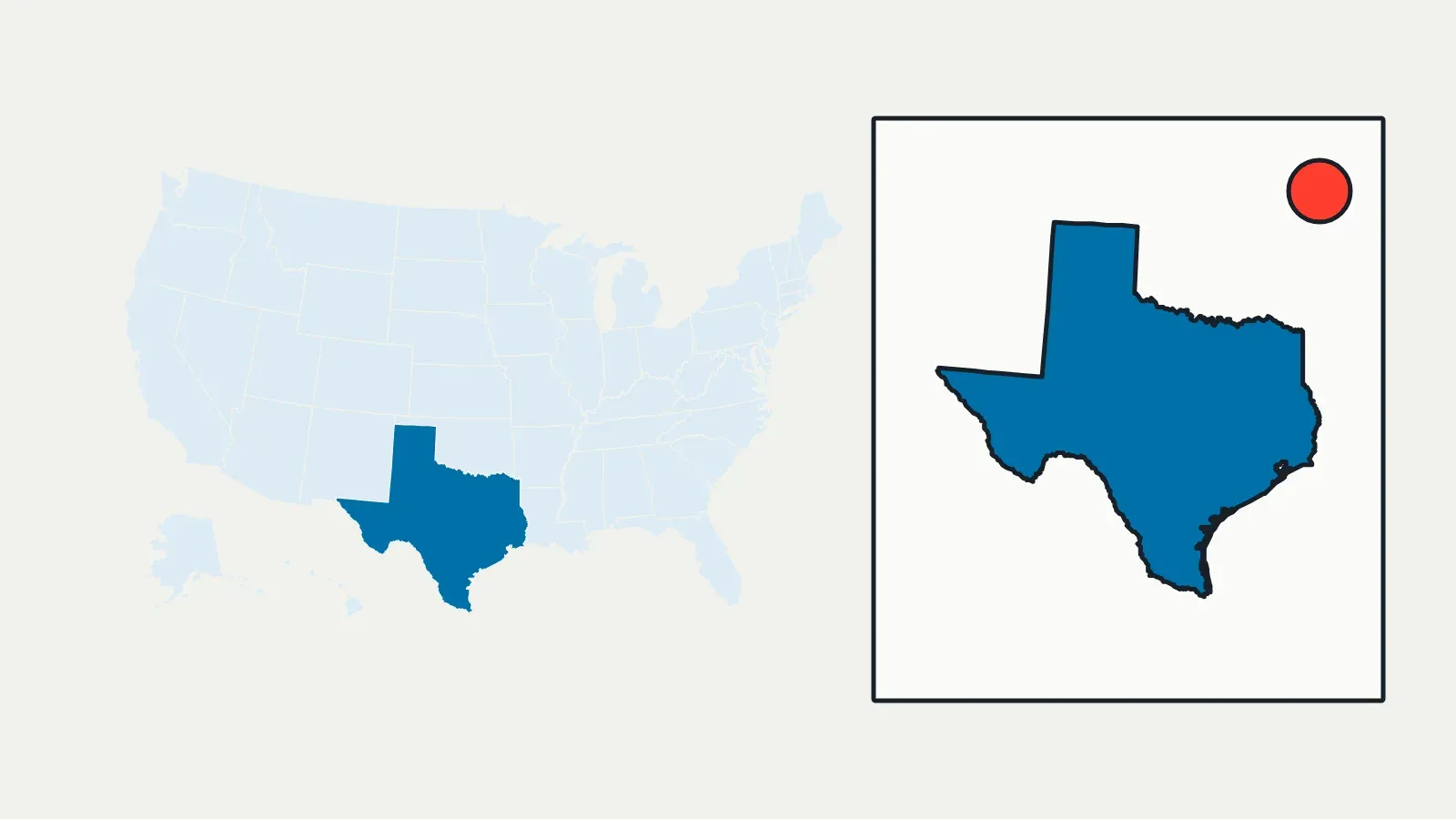
What a Texas policy must carry
The only coverage Texas law makes you buy is liability, at 30/60/25 or more. It pays people you injure and the property you damage, not you or your car. Proof of it has to be in the car, and the state checks insurance records when you register or renew.
| Coverage | Minimum | What it pays |
|---|---|---|
| Bodily injury, per person | $30,000 | One injured person's claim |
| Bodily injury, per accident | $60,000 | Everyone injured in one crash |
| Property damage | $25,000 | Other people's cars and property |
Those limits are the floor. A crash that sends two people to the hospital can pass $60,000 quickly, and anything above your limits is yours to pay. The liability limits page explains how people choose higher ones.
Included unless you reject it in writing
Personal injury protection
Every Texas auto policy includes PIP, at least $2,500 a person, for medical bills and part of lost income, whoever caused the crash. It stays on unless a named insured rejects it in writing.
Uninsured/underinsured motorist
Insurers must offer UM/UIM with every liability policy. It pays you when the at-fault driver has no insurance or too little, and it is removed only by a written rejection.
A written rejection usually follows the policy: once a named insured has rejected PIP, the insurer does not have to add it back at renewal unless you ask for it in writing. If you are not sure what you signed, ask your agent or insurer for a copy of the rejection form and your current declarations page.
Optional coverages Texans add
- Collision and comprehensive for your own car; a lender or lease company will require both.
- Medical payments, which pays medical bills for you and your passengers and is optional in Texas. See MedPay.
- Add-ons such as rental reimbursement, roadside assistance and gap coverage on a financed car.
Texas does not have a state rule for zero-deductible glass, so a windshield claim goes through comprehensive and its deductible unless you buy a glass option. A financed or leased car will also need collision and comprehensive for as long as the loan or lease runs, and the lender may set the highest deductible you can choose.
Rideshare drivers in Texas
Texas has its own coverage rules for drivers who work for app-based ride services. While the app is on and the driver is waiting for a request, the law calls for at least $50,000 per person, $100,000 per accident and $25,000 for property damage, plus UM/UIM and PIP unless rejected in writing; once a ride is accepted, the required limit rises to $1 million. The ride company's policy usually provides those limits, but a personal policy can exclude the waiting period. The rideshare endorsement page explains the gap and how an endorsement closes it.
Stacking and limits of UM in Texas
Texas statutes do not give drivers a right to stack uninsured motorist limits across several cars, and the policy forms used in Texas generally say the limit shown is the most paid for one accident, however many cars are insured. Read the limit of liability section of your own policy. How stacking works explains the idea.
Where to check and complain
- Read your declarations page to see which coverages and limits you have now, including PIP and UM/UIM.
- Ask the insurer for any rejection form on file if a coverage is missing.
- Contact the Texas Department of Insurance (800-252-3439) if an insurer will not explain a coverage or a claim decision.
Questions drivers ask
Is PIP required in Texas?
Insurers must include at least $2,500 of personal injury protection on every auto policy, but you can reject it in writing. If there is no written rejection, the coverage is on your policy.
Do I have to buy uninsured motorist coverage in Texas?
No. Insurers must offer it, and it stays on the policy unless you reject it in writing.
Is 30/60/25 enough coverage in Texas?
It meets the law. It often falls short after a crash with serious injuries; the liability limits calculator shows what a larger claim would leave uncovered.
Drawn from
- Texas Department of Insurance — Auto insurance guide
- Texas Insurance Code, Chapter 1952 (UM/UIM: §1952.101; PIP: §§1952.152–1952.153)
- Texas Insurance Code, Chapter 1954 (transportation network company drivers: §§1954.052–1954.053)
- Texas Department of Insurance — Your rights as an insurance consumer
Facts on this page were checked against these sources on November 15, 2026. Texas minimum liability limits have been 30/60/25 since 2011.
Have this coverage priced
CoverOath doesn't sell insurance. Answer five questions and CoverOath passes your request to licensed insurance agents and insurers, who can quote the coverage; you decide whether to buy anything.
- 1 The coverage you want priced.
- 2 Where an agent can reach you, and your consent.
- 3 A licensed insurance agent or insurer contacts you with a quote. Nothing is bought until you agree.
CoverOath is not paid by you. The licensed insurance agents and insurers who contact you set their own prices and terms. How we make money.
Adjacent layers
-
Core coverage
Personal injury protection (PIP)
Pays medical bills and lost income whoever caused the crash. Mandatory in the 12 no-fault states.
-
Core coverage
Uninsured motorist coverage (UM)
Pays your injuries when an uninsured or hit-and-run driver is at fault. Required in about 20 jurisdictions.
-
Fine print
How much liability coverage you need
State floors run as low as 15/30/5. Size your limit to what you own and earn, then add an umbrella if needed.