UM required
Massachusetts coverage menu: four compulsory parts and new minimums since 2025
Massachusetts builds its policy in numbered parts. Four are compulsory, and in 2025 the state raised the minimums for three of them. Underinsured motorist coverage is your choice, and stacking is barred by statute.
By CoverOath Editorial Team Updated 6 min read
The promise, in short
For policies written or renewed on or after July 1, 2025, Massachusetts requires bodily injury liability of $25,000/$50,000 (up from $20,000/$40,000), $30,000 of property damage liability (up from $5,000), personal injury protection of $8,000 per person, and uninsured motorist coverage of $25,000/$50,000. Underinsured motorist coverage is optional, and the statute forbids stacking UM limits. The compulsory bodily injury part applies only in Massachusetts. Division of Insurance: 877-563-4467.
- Minimum liability
- 25/50/30
- PIP
- Required, $8,000
- UM/UIM
- UM required; UIM optional
Massachusetts coverage menu
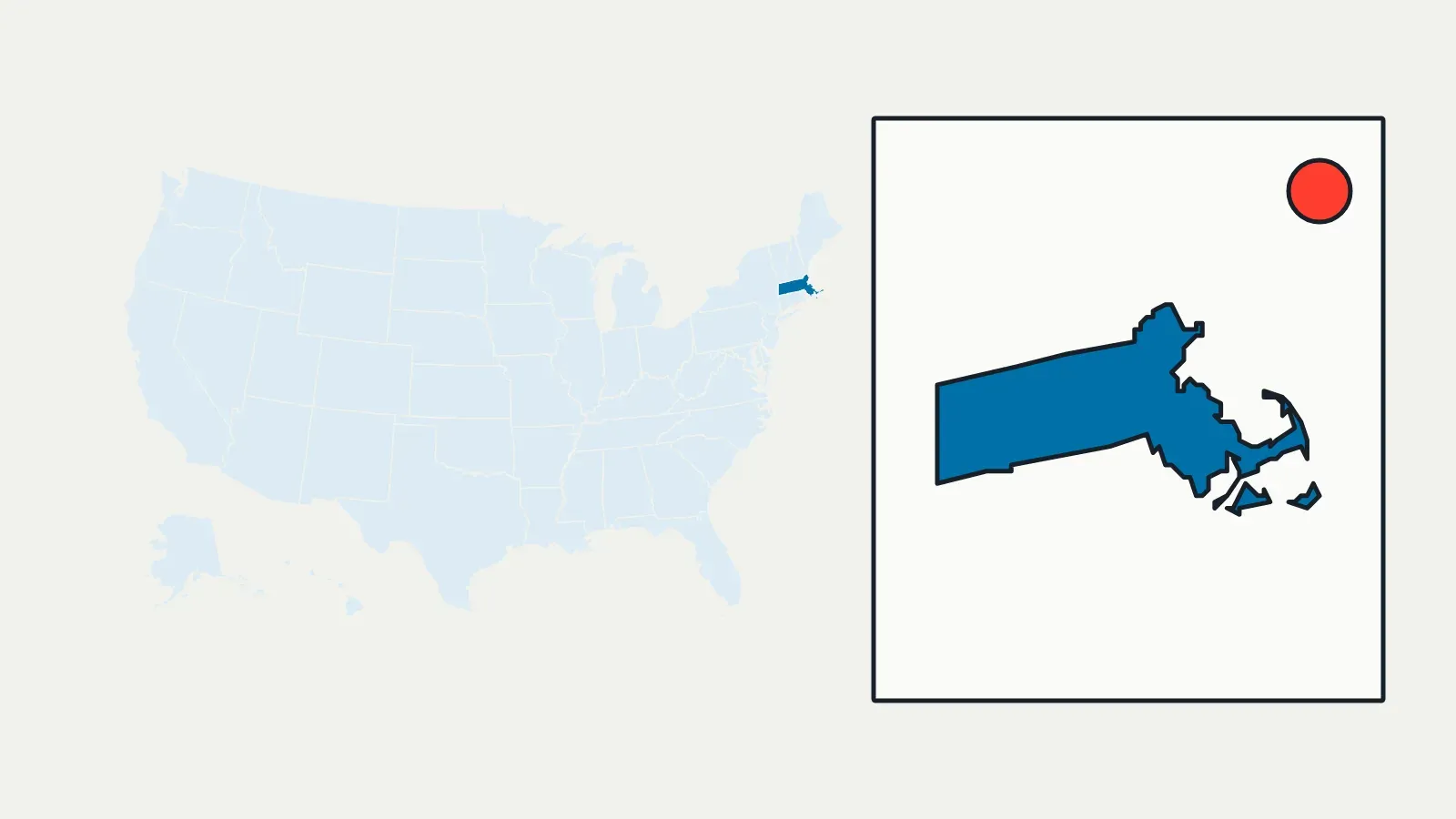
The four compulsory parts
The Massachusetts auto policy is divided into numbered parts. Four are compulsory; the Division of Insurance set out the new amounts in Filing Guidance Notice 2025-A, based on Chapter 275 of the Acts of 2024.
| Compulsory coverage | Minimum now | Before July 1, 2025 |
|---|---|---|
| Bodily injury to others | $25,000 per person / $50,000 per accident | $20,000 / $40,000 |
| Personal injury protection | $8,000 per person | Unchanged |
| Bodily injury caused by an uninsured auto | $25,000 per person / $50,000 per accident | Rose with bodily injury |
| Damage to someone else's property | $30,000 per accident | $5,000 |
The property damage minimum rose sixfold, from $5,000 to $30,000. Even so, a crash with a newer car or more than one vehicle can exceed it, and the excess is yours. The liability limits page covers how to choose more.
The new amounts did not change every policy on one day. They apply to policies written or renewed on or after July 1, 2025, so a 12-month policy that renewed in June 2025 kept the old limits until its next renewal. By now, any policy renewed since then should show at least the new figures. If you already carried limits above the new minimums, the law did not change your coverage at all.
Personal injury protection
Every Massachusetts policy includes PIP of $8,000 per person per accident. It pays injury-related losses for people covered under the policy regardless of who caused the crash, and the 2024 law left that amount unchanged. Medical payments coverage is optional; the Division says insurers and agents must offer at least $5,000 of it, and suggests weighing it against the health insurance you already have.
Uninsured and underinsured motorist coverage
Uninsured motorist (compulsory)
M.G.L. c. 175, §113L requires UM on every policy for a Massachusetts-registered vehicle. It covers injuries caused by uninsured and hit-and-run drivers, at least $25,000/$50,000.
Underinsured motorist (optional)
UIM applies only if you elect to buy it. It pays only the amount by which your UM limits exceed the at-fault driver's bodily injury limits.
The UIM formula means a UIM limit equal to the other driver's limit adds nothing. If you want UIM to pay after a crash with a minimum-limit driver, your UM/UIM limits need to sit above $25,000/$50,000. Section 113L covers bodily injury, sickness, disease and death; it does not address damage to your car, which is a collision claim.
Stacking is barred by statute
Section 113L is explicit: in no event can the limits for two or more vehicles or two or more policies be added together. The statute instead picks which single policy pays:
- Hurt in a car you or your household own: the policy covering that car.
- Hurt as a named insured in a car you do not own: the policy with the highest limits.
- Equal limits on several policies: the insurers share the loss pro rata.
How stacking works explains why other states handle this differently.
Optional coverages insurers must offer
The Division's consumer bill of rights lists amounts insurers and agents must offer you, including comprehensive coverage subject to a $500 deductible and medical payments of at least $5,000. Collision and comprehensive pay for your own car and are usually required by a lender. The Division notes that collision and comprehensive deductibles are often $500.
Where to check and complain
- Check your declarations page after your first renewal on or after July 1, 2025 for the new minimums.
- Look for Part 5 if you drive outside Massachusetts, and for UIM if you want it.
- Contact the Division of Insurance at 877-563-4467 (617-521-7794) or [email protected] with a question or complaint.
Questions drivers ask
What are the Massachusetts minimums now?
For policies written or renewed on or after July 1, 2025: $25,000/$50,000 bodily injury, $30,000 property damage, $8,000 PIP and $25,000/$50,000 uninsured motorist.
Is underinsured motorist coverage required in Massachusetts?
No. Uninsured motorist coverage is compulsory; underinsured motorist coverage applies only if you elect to buy it.
Does my compulsory Massachusetts coverage work in other states?
The compulsory bodily injury part applies only in Massachusetts. Optional Part 5 extends bodily injury coverage to the rest of the US and Canada.
Can I stack UM limits in Massachusetts?
No. M.G.L. c. 175, §113L says limits for two or more vehicles or policies can never be added together.
Drawn from
- Massachusetts Division of Insurance — Filing Guidance Notice 2025-A, new mandatory coverage limits (January 29, 2025)
- Acts of 2024, Chapter 275, §§1–4 (amending M.G.L. c. 90, §§34A and 34O)
- M.G.L. c. 175, §113L (uninsured and underinsured motorist coverage; stacking)
- Massachusetts Division of Insurance — Consumer bill of rights for automobile insurance
- Massachusetts Division of Insurance — How to contact the Division
Facts on this page were checked against these sources on November 15, 2026. The higher minimums apply to policies written or renewed on or after July 1, 2025.
Have this coverage priced
CoverOath doesn't sell insurance. Answer five questions and CoverOath passes your request to licensed insurance agents and insurers, who can quote the coverage; you decide whether to buy anything.
- 1 The coverage you want priced.
- 2 Where an agent can reach you, and your consent.
- 3 A licensed insurance agent or insurer contacts you with a quote. Nothing is bought until you agree.
CoverOath is not paid by you. The licensed insurance agents and insurers who contact you set their own prices and terms. How we make money.
Adjacent layers
-
Core coverage
Uninsured motorist coverage (UM)
Pays your injuries when an uninsured or hit-and-run driver is at fault. Required in about 20 jurisdictions.
-
Core coverage
Personal injury protection (PIP)
Pays medical bills and lost income whoever caused the crash. Mandatory in the 12 no-fault states.
-
Fine print
Driving in another state or Canada
Most policies cover the US and Canada and lift limits to another state's minimum while you drive there.