Offer, reject in writing
Hawaii coverage menu: higher liability minimums, PIP required, UM and UIM unless you sign them away
Hawaii doubled its liability minimums for policies starting on or after January 1, 2026. PIP is required, and uninsured and underinsured motorist coverage come with the policy unless you reject them. Here is what each line does.
By CoverOath Editorial Team Updated 6 min read
The promise, in short
Hawaii requires 40/80/20 liability on new and renewal policies effective on or after January 1, 2026: $40,000 per injured person, $80,000 per crash and $20,000 for property damage. The old minimum was 20/40/10. Every policy also needs $10,000 of personal injury protection. Uninsured and underinsured motorist coverage are part of the policy unless a named insured rejects them in writing, and insurers must offer a stacking option. The Hawaii Insurance Division takes calls at 808-586-2790.
- Minimum liability
- 40/80/20 since 2026
- PIP
- $10,000 required
- UM/UIM
- Offered, reject in writing
Hawaii coverage menu
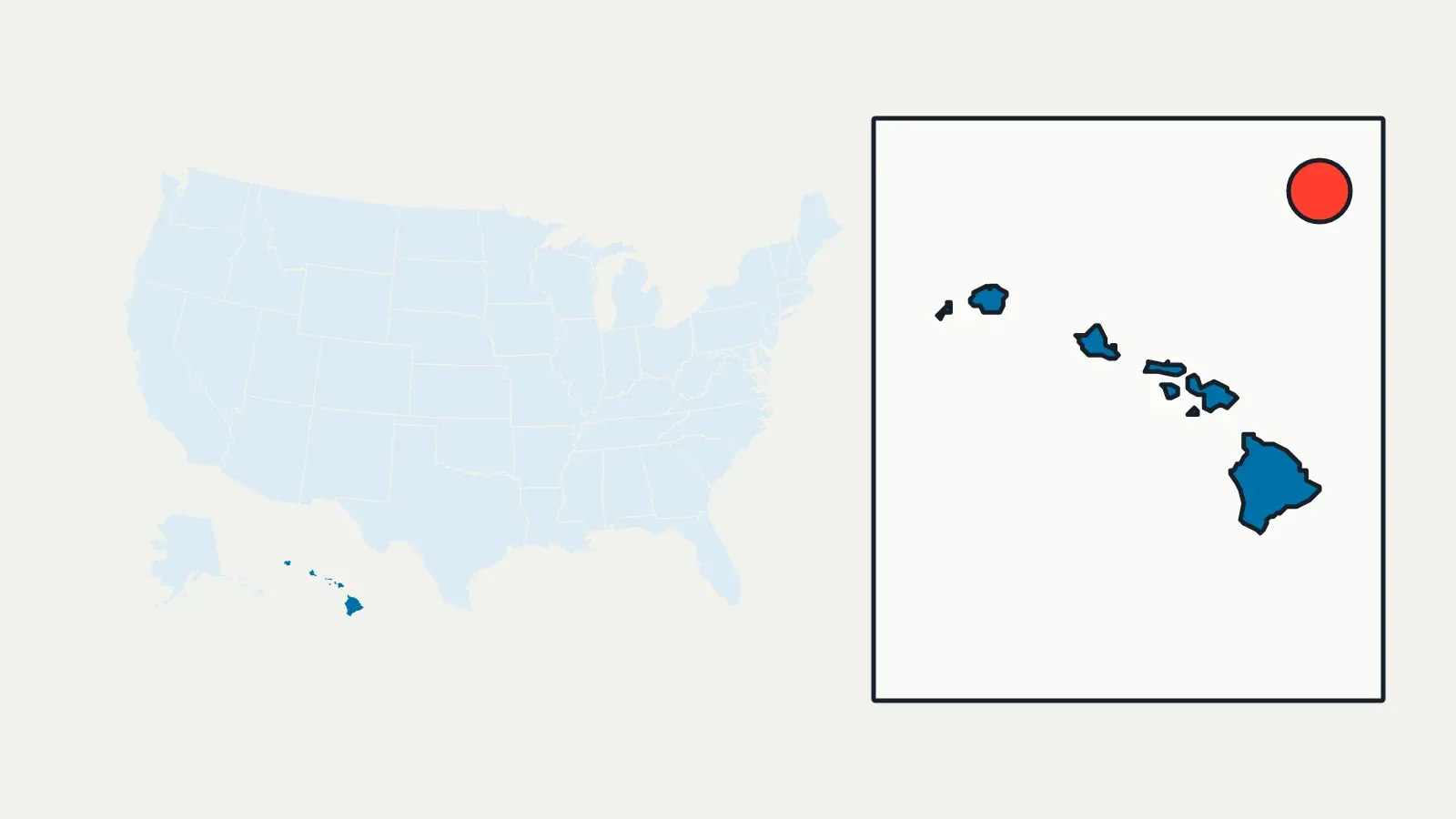
What a Hawaii policy must carry
Hawaii requires liability coverage and personal injury protection for the whole registration period. Proof of coverage, the Hawaii insurance identification card, must be in the car when you drive.
| Coverage | Minimum since Jan. 1, 2026 | Before |
|---|---|---|
| Bodily injury, per person | $40,000 | $20,000 |
| Bodily injury, per accident | $80,000 | $40,000 |
| Property damage | $20,000 | $10,000 |
| Personal injury protection, per person | $10,000 | $10,000 |
The new limits came from Act 138 of 2024 and apply to personal auto policies, new or renewed, with effective dates on or after January 1, 2026. A policy that last renewed before that date may still show the old limits until its next renewal, so a policy can lag behind the law for up to one policy term. If your declarations page still shows 20/40/10, ask your insurer when it will change.
Personal injury protection in Hawaii
PIP pays your own medical and rehabilitation costs after a crash, regardless of fault. Under HRS § 431:10C-103.5, it covers appropriate and reasonable treatment and expenses: medical, hospital, surgical, nursing, dental, chiropractic, ambulance and rehabilitation services, among others.
- The limit is $10,000 per person in total for those services.
- Insurers may offer PIP above $10,000; they are not required to.
- PIP does not pay for damage to cars. That is property damage liability for the other car and collision for yours.
Hawaii law does not require medical payments coverage in the sections cited here. Ask your insurer whether it sells extra PIP or MedPay and what each adds.
Uninsured and underinsured motorist coverage
Uninsured motorist (UM)
A policy for a car registered or principally garaged in Hawaii must include UM, at no less than the bodily injury minimums, unless a named insured rejects it in writing.
Underinsured motorist (UIM)
UIM is also required unless rejected in writing. The offer must be easy to see, show its premium beside it, and take your signature next to or below it.
Those rules for the UIM offer are there so a rejection is a real choice. The premium for UIM sits next to the offer, so you can see what declining saves. The Insurance Division's own premium guide notes that you may lower your premium by declining UM and UIM in writing, and it uses stacked UM and UIM at 40/80 in its sample coverage.
Stacking in Hawaii
HRS § 431:10C-301(c) prohibits stacking or aggregating UM or UIM coverage, with one exception. Under subsection (d), insurers must offer, with each policy, the option to stack UM and UIM and the option of non-stacked coverage up to your bodily injury limits. Once you buy or reject the options in writing, the insurer does not have to repeat the offer at renewal or on a replacement policy.
So stacking in Hawaii is something you choose, and it carries its own premium. If you insure more than one car, check whether your declarations page says stacked or non-stacked. How stacking works explains the difference.
Optional coverages and where to check
Collision and comprehensive are optional under state law, though a lender or lease company will require them. Add-ons such as rental reimbursement are sold by individual insurers on their own terms.
- Read your declarations page for your liability limits (40/80/20 or more on a 2026 policy), PIP and UM/UIM.
- Ask the insurer for any signed rejection if UM or UIM is missing, and check whether your coverage is stacked.
- Contact the Hawaii Insurance Division (Department of Commerce and Consumer Affairs) at 808-586-2790 if an insurer will not explain a coverage.
Questions drivers ask
What are Hawaii's minimum car insurance limits in 2026?
40/80/20 for new and renewal personal auto policies effective on or after January 1, 2026, plus $10,000 of PIP. The earlier minimum was 20/40/10.
Can I reject uninsured motorist coverage in Hawaii?
Yes. A named insured can reject UM in writing, and UIM can be rejected with a signature next to or below the offer. Without a rejection, both are on the policy.
Is stacking allowed in Hawaii?
Only if you take it. The statute prohibits stacking except through the stacking option that insurers must offer with each policy.
Drawn from
- Hawaii Revised Statutes § 431:10C-301 (required coverages, UM/UIM, stacking)
- Hawaii Revised Statutes § 431:10C-103.5 (personal injury protection benefits)
- Hawaii DCCA — FAQ: Auto insurance minimum limits (2026)
- Hawaii Insurance Division — 2026 motor vehicle premium publication
Facts on this page were checked against these sources on November 15, 2026. The 40/80/20 minimum applies to policies effective on or after January 1, 2026 (Act 138, Session Laws of Hawaii 2024).
Have this coverage priced
CoverOath doesn't sell insurance. Answer five questions and CoverOath passes your request to licensed insurance agents and insurers, who can quote the coverage; you decide whether to buy anything.
- 1 The coverage you want priced.
- 2 Where an agent can reach you, and your consent.
- 3 A licensed insurance agent or insurer contacts you with a quote. Nothing is bought until you agree.
CoverOath is not paid by you. The licensed insurance agents and insurers who contact you set their own prices and terms. How we make money.
Adjacent layers
-
Core coverage
Personal injury protection (PIP)
Pays medical bills and lost income whoever caused the crash. Mandatory in the 12 no-fault states.
-
Core coverage
Underinsured motorist coverage (UIM)
Pays your injuries above the at-fault driver's limit. Added-on UIM stacks on their payment; offset UIM subtracts it.
-
Fine print
Stacking UM/UIM coverage
Whether UM limits on several cars add up. Pennsylvania and Florida stack by default; California bans it.