Offer, reject in writing
Pennsylvania coverage menu: low liability floor, required medical benefits, and stacking unless you sign it away
Pennsylvania asks for little by law and offers a lot by default. Here is what each line pays, which forms take coverage off, and what the tort choice changes.
By CoverOath Editorial Team Updated 6 min read
The promise, in short
Pennsylvania requires 15/30/5 liability and a $5,000 first-party medical benefit that pays your own medical bills regardless of fault. Insurers must offer uninsured and underinsured motorist coverage; buying it is optional, but it comes off only on a signed rejection form that follows the wording in the statute. UM/UIM limits stack by default unless the first named insured signs a waiver. You also choose between full tort and limited tort. The Pennsylvania Insurance Department answers questions at 1-877-881-6388.
- Minimum liability
- 15/30/5
- Medical benefits
- $5,000 required
- UM/UIM
- Offered, reject in writing
Pennsylvania coverage menu
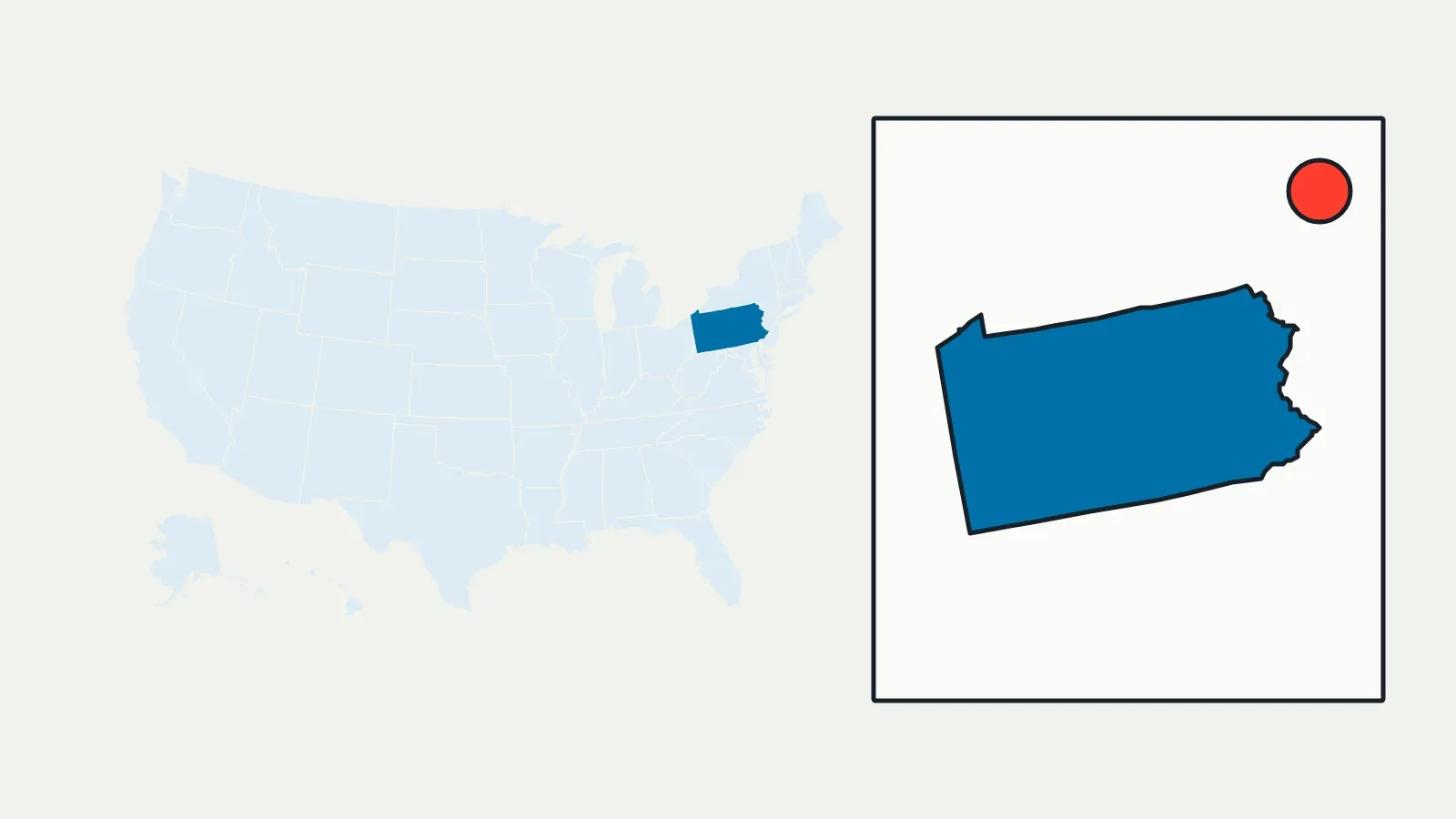
What a Pennsylvania policy must carry
The Pennsylvania Insurance Department lists three minimums. Two are liability, which pays other people when you cause a crash. The third is a first-party medical benefit, which pays your own bills.
| Coverage | Minimum | Whom it pays |
|---|---|---|
| Bodily injury liability | $15,000 per person / $30,000 per accident | People you injure |
| Property damage liability | $5,000 per accident | Property you damage |
| First-party medical benefits | $5,000 | Your own medical bills, regardless of fault |
The department notes that some insurers sell a $35,000 combined single limit that meets both liability minimums. A $5,000 property damage limit will not replace most cars on the road today, and the rest of the bill is yours. See how much liability coverage you need.
First-party benefits and the tort choice
The required $5,000 medical benefit works like PIP: it pays your medical bills after a crash without waiting for a fault decision. You can buy higher medical limits and other first-party benefits on top of it.
- Income loss pays part of your lost wages while crash injuries keep you from working.
- Funeral benefits pay funeral expenses up to the limit in the policy.
- Extraordinary medical benefits pay medical and rehabilitation costs above $100,000, up to $1.1 million, according to the department's guide.
Full tort
You keep unrestricted rights to sue an at-fault driver, including for pain and suffering. If you never elect limited tort, you are treated as having full tort.
Limited tort
A lower premium in exchange for giving up most pain-and-suffering claims, unless one of the exceptions in the law applies. Section 1705 requires insurers to offer both options.
Uninsured and underinsured motorist coverage
Section 1731 makes insurers offer uninsured and underinsured motorist coverage, and says buying it is optional. To remove either one, you sign a rejection form whose wording is set in the statute. A form that does not comply is void, and the coverage then applies at limits equal to your bodily injury liability limits.
- Lower limits: under §1734, a named insured may request in writing UM/UIM limits equal to or lower than the liability limits.
- Hit-and-run: an unidentified vehicle counts as uninsured under §1702 if the accident is reported to the police or proper government authority.
- No property damage: the department's guide says UM does not cover damage to property, so your car is a matter for collision coverage.
Stacking is the default
Under §1738, the UM/UIM limit applies separately to each insured vehicle. The department's guide puts it plainly: your limit is multiplied by the number of vehicles on the policy. With two cars and 15/30 UM, one injured person could reach $30,000 of UM coverage.
Senate Bill 578, introduced in April 2025, proposes ending UM/UIM stacking and making UM/UIM default to the liability limits you choose. The version we read had been referred to committee, not passed. Check the General Assembly's site before relying on today's rule for a future renewal.
Optional coverages Pennsylvanians add
- Collision and comprehensive for your own car; a lender or lease company will require both, often with a maximum deductible.
- Higher first-party medical limits than the $5,000 floor, if you want more money available for your own medical bills before health insurance or a lawsuit comes into play.
- Add-ons such as rental reimbursement, roadside assistance and gap coverage on a financed car.
Where to check and complain
- Read your declarations page for liability limits, medical benefits, UM/UIM limits, stacked or unstacked, and your tort option.
- Ask the insurer for copies of any UM/UIM rejection, lower-limit request or stacking waiver on file.
- Call the Pennsylvania Insurance Department at 1-877-881-6388 if an insurer will not explain a coverage or a claim decision.
Questions drivers ask
Is uninsured motorist coverage required in Pennsylvania?
No. Insurers must offer UM and UIM, and buying them is optional. They come off only on a signed rejection form that follows the statute's wording.
Does Pennsylvania have PIP?
Pennsylvania requires a $5,000 first-party medical benefit that pays your own medical bills regardless of fault. Higher limits and other benefits, such as income loss, are optional.
What does stacked UM coverage mean in Pennsylvania?
Your UM/UIM limit is multiplied by the number of vehicles on the policy. It applies unless the first named insured signs and dates a stacking waiver.
What happens if I never chose a tort option?
The Insurance Department says that if you did not specially elect limited tort, you are treated as having full tort.
Drawn from
- Pennsylvania Insurance Department — Auto insurance
- Pennsylvania Insurance Department — Auto Insurance Guide
- 75 Pa.C.S. Chapter 17 (§1702 definitions, §1705 tort options, §1711 medical benefit, §1731 UM/UIM, §1734 lower limits, §1738 stacking)
- Senate Bill 578 of 2025, Printer's No. 586 (proposed)
Facts on this page were checked against these sources on November 15, 2026. Senate Bill 578 is a proposal; the current stacking and waiver rules come from §1738.
Have this coverage priced
CoverOath doesn't sell insurance. Answer five questions and CoverOath passes your request to licensed insurance agents and insurers, who can quote the coverage; you decide whether to buy anything.
- 1 The coverage you want priced.
- 2 Where an agent can reach you, and your consent.
- 3 A licensed insurance agent or insurer contacts you with a quote. Nothing is bought until you agree.
CoverOath is not paid by you. The licensed insurance agents and insurers who contact you set their own prices and terms. How we make money.
Adjacent layers
-
Fine print
Stacking UM/UIM coverage
Whether UM limits on several cars add up. Pennsylvania and Florida stack by default; California bans it.
-
Core coverage
Underinsured motorist coverage (UIM)
Pays your injuries above the at-fault driver's limit. Added-on UIM stacks on their payment; offset UIM subtracts it.
-
Core coverage
Personal injury protection (PIP)
Pays medical bills and lost income whoever caused the crash. Mandatory in the 12 no-fault states.