UM + UIM required
New Jersey coverage menu: two policy types, PIP on both, UM/UIM on one
New Jersey lets you choose between a Standard Policy and a stripped-down Basic Policy. The choice decides whether you have liability coverage for injuries at all and whether uninsured motorist coverage is on the policy.
By CoverOath Editorial Team Updated 7 min read
The promise, in short
Since January 1, 2026, a New Jersey Standard Policy must carry at least 35/70/25 liability, personal injury protection and uninsured/underinsured motorist coverage at 35/70, plus uninsured motorist property damage. The Basic Policy is a lower-cost alternative with $15,000 of PIP, $5,000 of property damage liability and no UM/UIM. The New Jersey Department of Banking and Insurance (DOBI) regulates insurers; its consumer hotline is 800-446-7467.
- Minimum liability
- 35/70/25 (Standard)
- PIP
- Required, $15,000+
- UM/UIM
- Required (Standard Policy)
New Jersey coverage menu
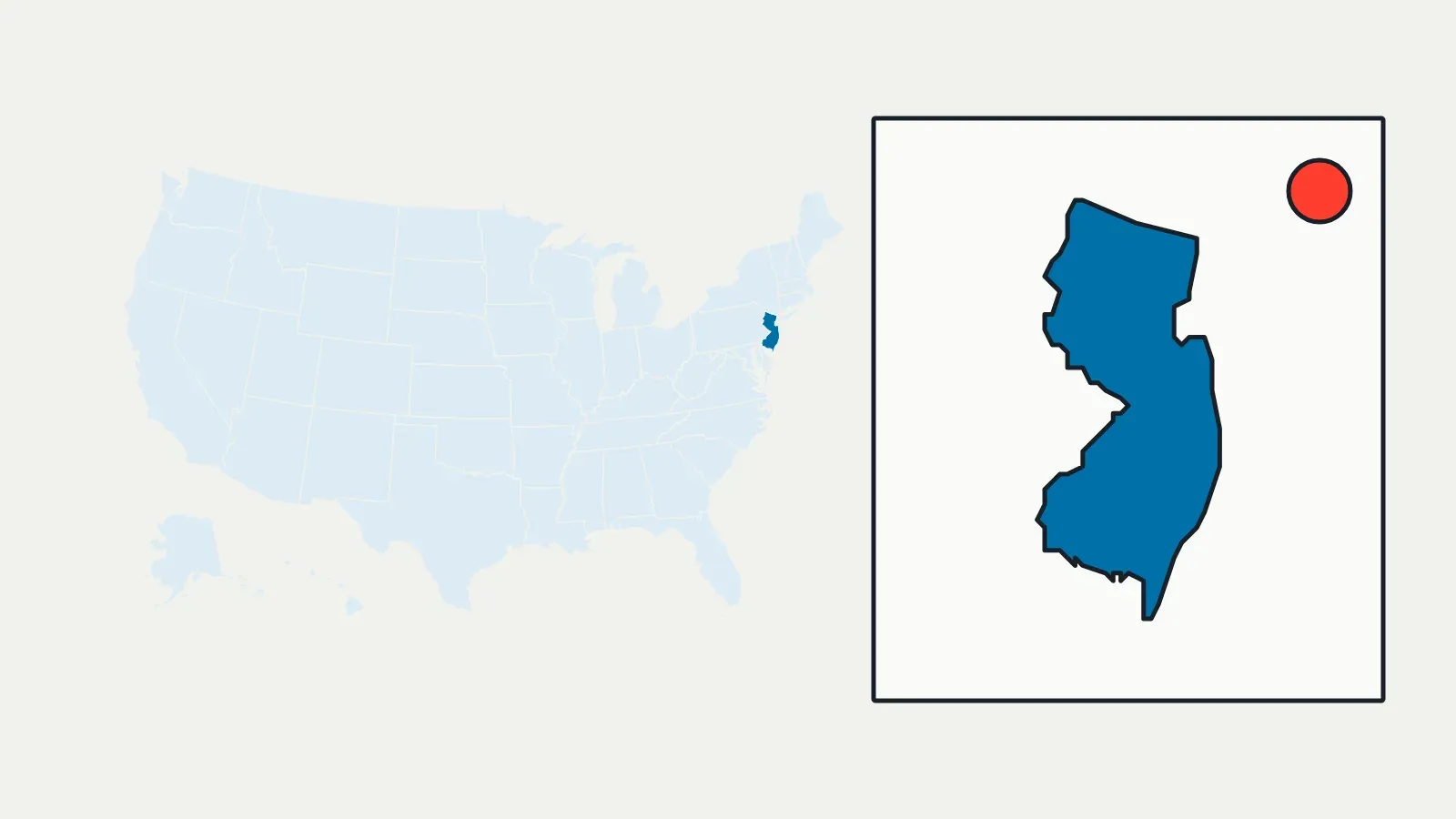
Standard Policy or Basic Policy
Before you choose limits, you choose a policy type. DOBI's 2026 buyer's guide lays out both. The Standard Policy is the full menu; the Basic Policy meets the legal minimum with far less in it.
| Coverage | Standard Policy | Basic Policy |
|---|---|---|
| Bodily injury liability | $35,000 per person / $70,000 per accident | None; $10,000 per accident optional |
| Property damage liability | $25,000 | $5,000 |
| PIP (medical) | $15,000 to $250,000 or more | $15,000; up to $250,000 for certain injuries |
| UM/UIM | Required; up to your liability limits | None |
| Right to sue | Limited or unlimited, your choice | Limited |
The Basic Policy leaves your savings exposed. With no bodily injury liability unless you add the $10,000 option, a claim from someone you hurt is yours to pay. DOBI says it may suit drivers with few family responsibilities and few assets. It usually costs significantly less than a Standard Policy because it pays for so much less.
The 2026 increase in minimum limits
New Jersey raised its minimums in two steps under P.L.2022, c.87. Policies issued or renewed on or after January 1, 2023 moved to 25/50/25. Policies issued or renewed on or after January 1, 2026 moved to 35/70/25. Property damage stayed at $25,000. DOBI Bulletin 25-06 told insurers to notify policyholders when a renewal raises their limits, and no new signed selection form is needed for that increase.
The same law raised the minimum UM/UIM limits on the same dates, so a Standard Policy now carries at least $35,000 per person and $70,000 per accident of uninsured and underinsured motorist coverage. The liability limits page explains why many drivers buy more than the floor.
PIP choices on a New Jersey policy
- Medical limit. You choose $15,000, $50,000, $75,000, $150,000 or $250,000; some insurers offer more. DOBI says $250,000 is the limit most buyers choose.
- Deductible and copay. You pay the deductible, then 20% of the next $5,000 of medical bills. Higher deductibles such as $500 to $2,500 lower the premium.
- Health insurance as primary. You can make your own health insurer pay first, with PIP as backup. Medicare and Medicaid cannot be used for this option.
- Extra PIP package. Income continuation, essential services, death and funeral benefits are optional add-ons to the medical coverage.
PIP pays your own medical bills whoever caused the crash. Your choice on the right to sue is separate: the limited option bars pain-and-suffering claims unless the injury is on the statute's list, such as a displaced fracture, significant scarring or a permanent injury. It does not limit claims for economic losses.
UM/UIM details in New Jersey
Required at 35/70
Every policy except the Basic Policy must include UM and UIM at the minimum limits. You may buy more, but never more than your own liability limits.
Property damage included
Uninsured motorist property damage is required too: up to $25,000 per accident, and you pay the first $500. It does not apply to hit-and-run vehicles.
Under N.J.S.A. 17:28-1.1, a driver counts as underinsured only when the liability limits available from that driver are lower than your own UIM limits, and only after those limits are paid out. Your UIM limit is then reduced by what the at-fault driver's insurer paid. That is why a UIM limit equal to the minimum liability limits adds little; insurers must offer UIM up to at least $250,000 per person and $500,000 per accident. DOBI's 2026 guide says a minimum amount of uninsured/underinsured motorist coverage is required in a Standard Policy, while the statute itself describes underinsured coverage as an option the insurer must provide, so check that your declarations page lists both UM and UIM.
Where to check and complain
- Read your declarations page to see whether you have a Standard or Basic Policy, your PIP limit and deductible, and your UM/UIM limits.
- Check your coverage selection form for your right-to-sue choice and any health-insurance-primary election.
- Contact DOBI at 800-446-7467 if an insurer will not explain a coverage or a claim decision.
Questions drivers ask
What is the minimum car insurance in New Jersey in 2026?
For a Standard Policy issued or renewed on or after January 1, 2026: 35/70/25 liability, PIP and UM/UIM at 35/70. The Basic Policy carries $15,000 of PIP and $5,000 of property damage liability, with no UM/UIM.
Can I reject uninsured motorist coverage in New Jersey?
Not on a Standard Policy, which must carry UM/UIM at the minimum limits. The Basic Policy does not include it.
Can I stack UM/UIM coverage in New Jersey?
No. The statute says the limits are not increased by stacking, and with several policies you recover no more than the highest single limit.
Is PIP required in New Jersey?
Yes, on both policy types. On a Standard Policy you choose a medical limit from $15,000 to $250,000 or more; see personal injury protection.
Drawn from
- NJ Department of Banking and Insurance — New Jersey Auto Insurance Buyer's Guide (2026)
- NJ Department of Banking and Insurance — Standard Policy
- NJ DOBI Bulletin No. 25-06 (P.L.2022, c.87 limit increases)
- N.J.S.A. 17:28-1.1 (UM/UIM, UMPD and stacking), Justia 2025 edition
Facts on this page were checked against these sources on November 15, 2026. The 35/70/25 minimums apply to Standard Policies issued or renewed on or after January 1, 2026.
Have this coverage priced
CoverOath doesn't sell insurance. Answer five questions and CoverOath passes your request to licensed insurance agents and insurers, who can quote the coverage; you decide whether to buy anything.
- 1 The coverage you want priced.
- 2 Where an agent can reach you, and your consent.
- 3 A licensed insurance agent or insurer contacts you with a quote. Nothing is bought until you agree.
CoverOath is not paid by you. The licensed insurance agents and insurers who contact you set their own prices and terms. How we make money.
Adjacent layers
-
Core coverage
Personal injury protection (PIP)
Pays medical bills and lost income whoever caused the crash. Mandatory in the 12 no-fault states.
-
Core coverage
Underinsured motorist coverage (UIM)
Pays your injuries above the at-fault driver's limit. Added-on UIM stacks on their payment; offset UIM subtracts it.
-
Fine print
Stacking UM/UIM coverage
Whether UM limits on several cars add up. Pennsylvania and Florida stack by default; California bans it.